
 MentorX
 1
1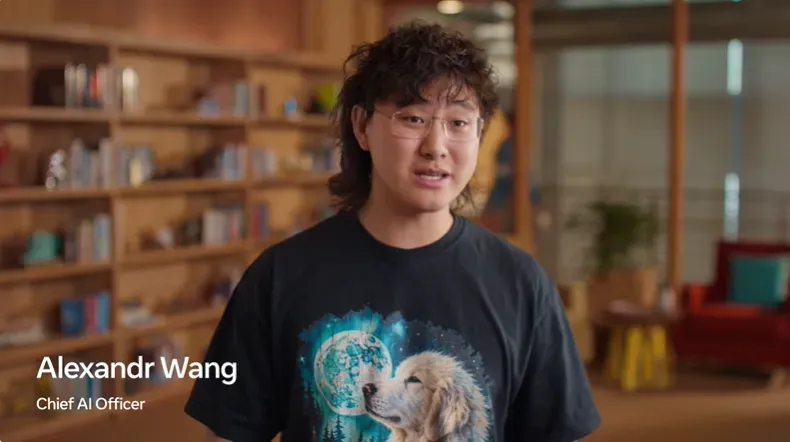
On October 12, Mark Zuckerberg made the official announcement personally: Meta Superintelligence Lab (MSL) has released two flagship models, Muse Wonder and Muse Wonder Full.
Meta’s Flagship Makes an Overnight Comeback Into the World’s Top Three: Is It Trouncing GPT‑6 and Opus? Only Half the Story
On October 12, Mark Zuckerberg made a personal official announcement: Meta Superintelligence Lab (MSL) has released two flagship models, Muse Wonder and Muse Wonder Full.
After more than a year, Meta finally has a competitive offering that can go head‑to‑head against OpenAI and Anthropic. Multiple media outlets ran headlines claiming it is “trouncing GPT‑6 and Opus”, and the topic went viral online.
Still, the claim of “trouncing rivals” holds only partial truth.
What does this development actually mean — and what are its implications for families planning their children’s academic paths? It merits a detailed breakdown.
01 What Happened: The 14‑Month‑in‑the‑Making “Watermelon” Project
First, the facts. Codenamed internally “Watermelon”, the Muse Wonder series is Meta Superintelligence Lab’s first flagship model claiming state‑of‑the‑art performance since the lab launched over a year ago.
It was trained on Meta’s “Prometheus” supercluster in Ohio with capacity exceeding one gigawatt. Simply put, this represents a high‑compute, 14‑month‑long heavy‑investment project.
The two models serve distinct roles. Muse Wonder is available via the Meta Model API. The more powerful Muse Wonder Full is accessible exclusively to Muse Code subscribers under a closed‑source subscription model, breaking with Meta’s open‑source tradition established with Llama.
02 The “Trouncing‑Rivals” Claim Is Only Half‑True
Turning to benchmark rankings. On Artificial Analysis Intelligence Index (v4.3), Muse Wonder Full scores 56 points while Muse Wonder scores 52 points — a notable jump from Muse Spark 1.3’s 48 points six weeks earlier. Overall, Wonder Full ranks second globally with 56 points, trailing only Claude Opus 5.5 at 58 points and placing ahead of GPT‑6 Astra.
Yet “trouncing” only applies within specific benchmark tracks. Wonder Full does outperform both GPT‑6 Astra and Opus 5.5 on long‑horizon tests including real‑world software‑engineering task DeepSWE 1.1, long‑duration coding benchmark SWE‑Marathon, and legal‑agent evaluations. However, on ProgramBench, which measures building entirely new programs from scratch, Opus 5.5 still leads with 70.5 versus Wonder Full’s 59 points.
The conclusion is straightforward: Meta has not achieved comprehensive market supremacy. Instead, it has secured a strong lead in one fast‑growing technical domain.
03 The Real Signal: AI Competition Shifts Toward Long‑Horizon Agents
This is the most meaningful takeaway. Previously, competition centered on turn‑based question‑and‑answer performance. Today the battleground has quietly shifted: can an AI autonomously complete multi‑step tasks spanning multiple days and self‑correct along the way?
The Wonder series highlights two core capabilities: Active Memory for persistent cross‑conversation memory and Active Focus for in‑task self‑correction. Fundamentally these are built for personal and professional AI agents. Instead of merely answering questions, the model is expected to get real‑world work done on human behalf.
Whichever system delivers stable performance on these complex long‑running tasks will define competitive advantage for the next‑generation AI landscape.
04 Paradigm Shift: The Former Open‑Source Champion Plays Its Cards Close to the Chest
Another critical observation: Meta’s top flagship model is now closed‑source.
Over past years, Meta built tremendous goodwill within the open‑source community through Llama and earned its reputation as “open‑source champion”. This time, its most advanced capabilities are locked behind a subscriber‑only paywall. This is no random choice. As top‑tier AI competition returns to a paradigm defined by cutting‑edge, high‑cost, closed systems, Meta evidently no longer wants to give away its strongest technology for free.
For the broader industry, this signals that the upper limits of AI capability are increasingly determined by who can access massive compute resources and contain them behind subscription barriers.
05 What This Means for International Students and Forward‑Planning Families
Now for the question top‑of‑mind for many parents: how will these shifts shape children’s future major selections and career prospects?
1. Rigorous technical majors in computer science and AI are not losing importance — they are growing more valuable.
The best‑performing models shine most brightly on demanding long‑horizon tasks requiring deep engineering expertise. This translates to rising real‑world demand for roles such as software engineer and agent engineer, rather than shrinking demand.
2. Basic AI literacy alone is no longer a market differentiator.
The talent most sought‑after today is not people who can merely write prompts. Employers want well‑rounded professionals who can operate long‑horizon AI agents, judge their outputs, correct errors at critical junctures, and deliver complete finished work.
The more powerful AI becomes, the more valuable the ability to deliver full end‑to‑end outcomes augmented by AI grows.
3. For students planning to study in the United States, structural opportunities coexist alongside heightened challenges.
More high‑quality roles are opening up, yet hiring criteria for verifiable, project‑based hands‑on experience are also rising. Academic grades alone are no longer sufficient to prove you can deliver practical work.
That is why we repeatedly advise families of international students: do not train young people simply “to study AI”. Help them become professionals who can leverage AI to deliver real‑world projects.
If you are weighing major options for your child, or want to learn which AI and software‑engineering roles are expanding in the U.S., plus sources for verifiable internships and project opportunities, follow Vine Education. We deliver practical planning advice and referral resources tailored to each student’s stage.
Closing Thoughts
Whether Meta can sustain its top‑three position awaits further independent evaluations; it is too early to draw definitive conclusions.
One trend, however, is unambiguous: AI competition is no longer about how cleverly an AI can answer questions. It revolves around whether an AI can execute complex assignments from start to finish.
For the next generation, those who perceive this shift and proactively build matching skill sets will be best positioned to seize emerging opportunities.