
 MentorX
 0
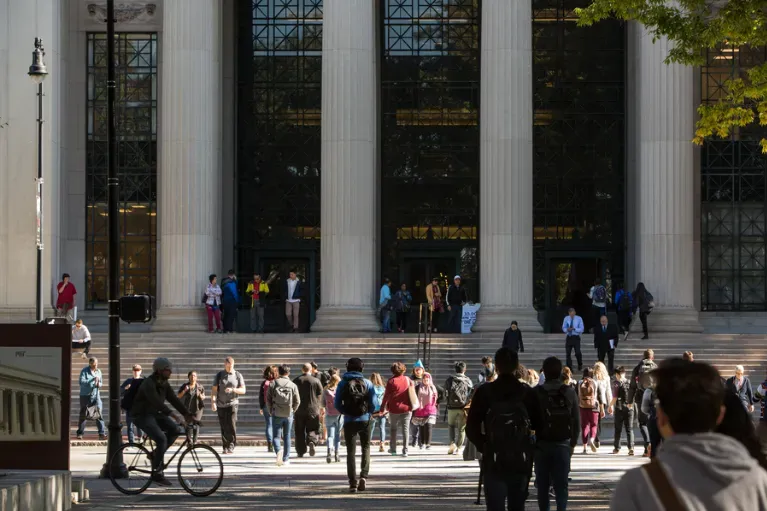
On November 10 local time, the U.S. Presidents' Alliance (the association of university presidents) released the formal written comments it had submitted to DHS, publicly opposing the proposed new OPT fee rule.
Lead-in:** In recent days, a coalition of U.S. university associations has formally submitted written comments to federal regulators opposing a highly controversial DHS proposal to impose fees on OPT. A $70,000 fee for a first OPT authorization and $30,000 for subsequent OPT is more than a cost problem for international students — it is a serious blow to the entire U.S. talent-acquisition pipeline.
On November 10 local time, the U.S. Presidents' Alliance (the association of university presidents) released the formal written comments it had submitted to DHS, publicly opposing the proposed new OPT fee rule.
The document was filed on regulations.gov, the federal rulemaking comment platform (Docket No. ICEB-2026-0100), which means the university sector's opposition is no longer just verbal comment in the media but has entered the statutory comment process of rulemaking — and will be considered by DHS in its review of the final rule.
The core design of this proposal is entirely different from how people have understood OPT fees in the past: the fee is not paid by students directly to the immigration service, but by SEVP-certified institutions, paid up front. The rates are $70,000 for a first OPT application and $30,000 for subsequent OPT (including STEM extensions and similar). Schools may choose to pass the cost on to students, or to have it borne by employers who hire international graduates.
Many people's first reaction is: OPT is the core channel through which international students gain post-graduation work experience in the United States. How high is this fee, really?
The Presidents' Alliance states its conclusion directly in its comment letter: the fee scheme is essentially equivalent to terminating the OPT program.
I. The high fees hit more than just international students
Within Chinese student and parent circles, OPT is the key bridge from studying abroad to gaining U.S. work experience and moving on to a work visa. After bachelor's, master's or doctoral graduation, students can work legally in the United States through OPT — 12 months for most fields, extendable to 36 months for STEM majors — and it is the path to staying in the U.S. that a great many Chinese STEM students rely on most.
But the blast radius of this proposal extends far beyond the international student community.
The university associations, NAFSA (the Association of International Educators), ACE (the American Council on Education), AILA (the American Immigration Lawyers Association) and other bodies have submitted joint comments in recent days, collectively identifying three chained harms.
First, it directly kills international students' U.S. employment options.
Even if schools do not charge students directly, employers will abandon hiring international graduates on OPT because of the high cost.
For international students, after working hard to finish a degree that would originally have let them build an overseas work record through OPT, they now become a "high-cost liability" for employers.
For ordinary international students with limited budgets and no access to large-company pipelines, the OPT route is all but closed off.
Second, it damages the educational and recruiting competitiveness of U.S. universities themselves.
U.S. institutions — public universities and small and mid-sized private colleges in particular — take in large numbers of international students each year, and international enrollment is a key component of a school's diverse academic environment, its research teams and its tuition revenue.
Once OPT costs soar, overseas applicants will simply abandon U.S. institutions and turn to the UK, Canada, Singapore and other countries.
According to Inside Higher Ed, many institutions have calculated that once the new rule takes effect, a single school could face tens of millions of dollars in additional costs each year, and many would be unable to keep supporting international students' OPT.
Third, it harms the long-term interests of U.S. employers and, ultimately, U.S. students themselves.
U.S. technology, engineering, healthcare and advanced manufacturing industries have long depended on international talent to fill labor shortages. Many U.S. companies — start-ups and small tech firms especially — need STEM talent to sustain R&D.
If OPT costs rise to the point where employers dare not hire, their hiring options shrink and their R&D pace slows.
The university comments specifically note that the technological innovation and job creation that international students bring ultimately benefit U.S. students as well; when the talent channel closes, the domestic job market absorbs the damage too.
One key point that many parents confuse also needs clarifying: CPT is not covered by this fee proposal. CPT is work authorization during study and operates under a separate mechanism from post-graduation OPT, so it is not affected by this proposal for now. But OPT — especially the STEM OPT extension — is the core route by which the vast majority of international students work in the U.S. after graduation.
II. Major authoritative bodies speak out in unison, with a single demand: withdraw the proposal
The Presidents' Alliance is not the only institution objecting. Within this comment window, the U.S. higher education sector and immigration practitioner associations have already formed a united front:
NAFSA, the Association of International Educators, submitted formal comments on November 3; it has worked on international education policy for decades and is the most authoritative industry organization in this field in the United States;
ACE, the American Council on Education, joined 36 higher education organizations in submitting joint comments on November 9, representing a large number of comprehensive research universities;
AILA, the American Immigration Lawyers Association, also submitted legal comments, challenging the proposal on grounds of regulatory rationality and immigration policy logic.
Their core demand is highly consistent: they want DHS to withdraw this OPT fee proposal outright and not proceed with the tiered $70,000-plus-$30,000 fee scheme.
It is worth noting that this is the statutory rulemaking process, not simply a public-opinion protest.
Before finalizing an official rule, DHS is obliged to review all written comments submitted by the public and organizations in the regulations.gov docket.
But it must also be stated objectively: submitting opposing comments does not mean the proposal will necessarily be rejected, and the final outcome remains uncertain.
The proposal was first published in the Federal Register on October 8, under Docket No. ICEB-2026-0100. All public documents and organizational comment letters can be viewed publicly on regulations.gov, and the entire record is traceable.
III. Practical reminders for international students and parents
The policy is still in the comment-gathering stage and the new rule has not taken effect. Current OPT policy is unchanged for the time being, and enrolled students and those who already hold an I-20 and are preparing to apply for OPT can plan as usual under existing procedures. But the risk signals are already very clear. A few practical suggestions:
1. Don't bet blindly on the single route of "stay in the U.S. on OPT after graduation."** Lay out parallel plans for employment and work visas in other countries, or for finding work in China, and have a backup.
2. Distinguish by field:** STEM majors, who currently get three years of OPT, are the group most affected by this proposal; non-STEM majors have only 12 months of OPT to begin with, and are also covered by the fee.
3. Keep tracking the docket:** all formal documents are public on regulations.gov, and later DHS revisions and the final version will be posted to this same docket.
4. Read the commentary rationally:** opposition from universities and industry associations is an important countervailing force, but U.S. immigration policy is highly volatile and any proposal carries uncertainty. Don't believe extreme claims that it "definitely won't pass" or that it "will take effect any day now."
For a long time, the OPT system has been a core mechanism through which the United States attracts outstanding talent from around the world.
U.S. universities stress repeatedly in their comment letters that the reason the United States can keep drawing the world's best students is precisely an open, affordable post-graduation internship and employment channel. When OPT becomes a prohibitively expensive program, talent flows will naturally redirect to other immigrant-friendly countries.
Talent competition is never one-directional. Raise the barriers and add enormous costs, and what is ultimately lost is global talent's confidence in choosing U.S. universities and the U.S. job market.
We will continue to track updates in Docket No. ICEB-2026-0100 and will publish analysis as soon as DHS issues a revised proposal or a final rule.
Sources for this article: public docket documents from the Presidents' Alliance, NAFSA, ACE, Inside Higher Ed, the Federal Register and regulations.gov. This article is for policy information and general education only and does not constitute immigration or study-abroad planning advice.