
 MentorX
 94
94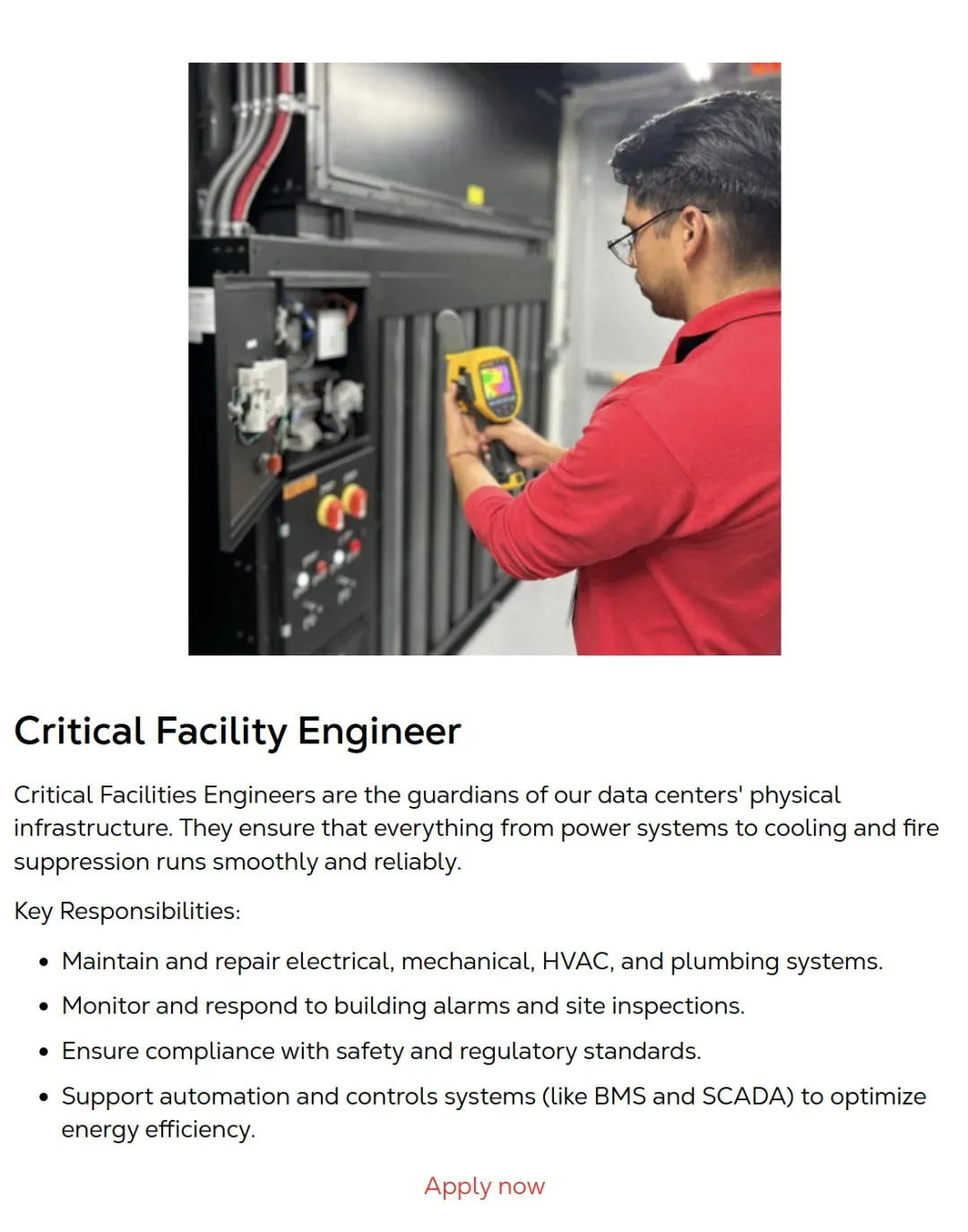
Competition in AI infrastructure is expanding beyond “who can buy GPUs” to “who can secure sufficient power and deliver it reliably to every server.”
Over the past two years, when talking about AI infrastructure, the market’s top question has consistently been: Who can secure more GPUs?
But now, a wave of AI companies is facing a more pragmatic problem: even after purchasing GPUs, data centers may not receive power on schedule.
ERCOT, the grid operator for Texas, is tracking large power applications exceeding 438 GW, nearly 89% of which come from data centers. Faced with applications far exceeding the grid’s carrying capacity, ERCOT has launched centralized reviews for large-scale projects. In August this year, regulators also approved revisions to review workflows for the first batch of projects. This means some data centers, even after site selection and upfront investment, must first prove their power demands are legitimate and their projects are viable before gaining approval to move forward with grid interconnection.
Competition in AI infrastructure is expanding beyond “who can buy GPUs” to “who can secure sufficient power and deliver it reliably to every server.”
01 Why Is AI Suddenly So Power-Hungry?
When regular people use AI, they only see text generated in a few seconds. Behind those outputs, however, thousands of GPUs run continuous computations inside data centers.
AI servers consume far more electricity and have much higher power density than traditional servers. In its newly released AI data center power project, UC San Diego notes that a single rack of AI hardware can draw up to 50 times the power of a conventional server rack from a few years ago.
When thousands upon thousands of GPUs are housed in one campus, the issue is no longer simply “is there a power plant nearby?”
For electricity to travel from the grid to GPUs, it must pass through transmission lines, substations, transformers, switchgear, UPS systems and on-site power distribution systems. Insufficient capacity, delayed equipment delivery or stalled approvals at any stage can hold up the launch of an entire data center.
Recent debates in Texas illustrate this tension. On one hand, residents worry data centers and new transmission lines will occupy land and consume water and power resources. On the other hand, ERCOT and industry leaders warn that continued delays for critical transmission projects will raise grid congestion, blackout risks and energy costs.
Meanwhile, the Tennessee Valley Authority (TVA) revised its wholesale electricity pricing structure in August to meet surging data center demand, requiring large power consumers to bear corresponding costs for power supply and supporting infrastructure.
02 What New Jobs Are Created by AI’s Power Crunch?
As data centers evolve from ordinary server rooms into infrastructure projects requiring hundreds of megawatts, or even gigawatts of power, the talent pool needed extends far beyond algorithm engineers and software developers.
From planning to operation, an AI data center requires site selection, power system design, substation construction, backup power deployment, cooling system integration, equipment commissioning, safety management and ongoing maintenance. It functions like a large-scale industrial project merging power engineering, mechanical engineering, civil engineering and IT systems.
In January this year, IEEE Spectrum reported that data center developers are seeing rising demand for electrical, mechanical, civil, construction management, high-voltage power system, HVAC and facilities operations specialists. Shortages of traditional talent have pushed some firms to recruit professionals with power and cooling expertise from nuclear, aerospace and defense industries.
This also means opportunities are not limited to EE majors.
- Students with Electrical Engineering backgrounds may target Power Systems, Power Distribution, Substation, Protection & Controls roles.
- Mechanical Engineering students can enter HVAC, Liquid Cooling and Thermal Management tracks.
- Civil Engineering and Construction Management graduates may work on campus development, substation facilities and MEP construction.
- Students majoring in Energy, Environmental Studies or Public Policy can pursue grid planning, energy procurement, grid interconnection, compliance and sustainability positions.
The U.S. Bureau of Labor Statistics projects 7% job growth for Electrical and Electronics Engineers between 2024 and 2034, with roughly 17,500 openings annually. It is important to note that this figure does **not** represent 17,500 new roles created yearly exclusively for AI data centers; it also covers replacement openings from retirements and job transitions. IEEE’s analysis confirms these skill sets are highly relevant to data center design, construction, commissioning and operation.
For international students, the key takeaway is not an overhyped market number. Instead, AI infrastructure is recombining career opportunities once scattered across power, engineering, construction and facilities management.
03 Beyond Big Tech: Which Companies to Watch?
If you only search for OpenAI, Google or NVIDIA, you will only see the most visible layer of the AI supply chain. At least four categories of companies around data center power deserve a spot on your job-hunting list.
1. Cloud and tech giants such as Microsoft, Amazon and Google. These firms build AI products while also designing, constructing and operating data centers.
Microsoft’s data center careers page groups roles including Electrical Engineer, Mechanical Engineer, Construction Manager, Commissioning Manager and Critical Environment Technician into distinct career paths.
2. Data center developers and operators: Equinix, Digital Realty, QTS, Vantage Data Centers and Applied Digital.
Take Equinix as an example. Its Critical Facilities roles maintain power, mechanical, HVAC and fire protection systems to guarantee round-the-clock stable data center operation.
3. Electrical equipment, energy and automation vendors: Schneider Electric, Siemens, Eaton, ABB and GE Vernova. Most switchgear, UPS, transformers, control hardware and energy management systems used by data centers come from these suppliers.
An IEEE article mentions Siemens plans to train 200,000 electricians and electrical manufacturing professionals by 2030, reflecting strong industry demand for skilled power infrastructure workers.
4. Engineering consulting, EPC and commissioning firms. They deliver electrical design, construction oversight, system testing and project handover. For international students without pure electrical backgrounds but with training in mechanical, architectural, civil, construction management or supply chain, these companies often provide accessible entry points into the AI infrastructure industry.
These employers may not label roles uniformly as “AI Jobs”. Many opportunities are hidden under keywords: Data Center, Critical Facilities, Mission Critical, MEP, Commissioning, Utility or Infrastructure. You still need to verify each opening individually on corporate websites for availability, new-grad eligibility and visa sponsorship; industry expansion alone does not guarantee open roles.
04 What Should International Students Build Right Now?
To tap into this supply chain, your first step is not to awkwardly add “interested in AI” to your resume. Instead, understand what real problems data centers need to solve.
Engineering students can supplement coursework and projects around Power Distribution, UPS, Switchgear, Transformers, Substations, Protection and Relaying, Controls, HVAC and Cooling-Power Integration. For field and operations-focused roles, you also need familiarity with Critical Facilities, Redundancy, Reliability, Commissioning, plus MOP, SOP and emergency response concepts. Job postings from Microsoft and Equinix emphasize facilities monitoring, equipment maintenance, troubleshooting and safety protocols.
Non-engineering students also have viable paths. Data center development involves energy procurement, project finance, supply chain, site permitting, regulatory compliance, vendor management and project operations. The key is to anchor your expertise within a specific workflow, rather than forcing yourself to market as an AI engineer just to chase trends.
When building project portfolios, target realistic industry scenarios: run data center load calculations, design backup power schemes, simulate microgrid and energy storage dispatch, analyze power-cooling coordination, or study grid interconnection and cost-sharing for large power consumers. UC San Diego’s latest project tests an innovative power architecture to cut conversion losses, reduce equipment footprint and improve grid-data center coordination.
AI job seekers traditionally fixate on models, software and chips. But as AI scales into mass deployment, physical infrastructure — tangible, built systems — determines how fast and how broadly AI can expand.
AI models generate intelligence, GPUs deliver compute power, and a growing workforce makes sure all of it gets powered up and runs reliably.
MentorX provides end-to-end one-on-one support: policy breakdown, career roadmap planning, resume refinement, interview training and referrals to top firms. We help you clarify internship and job search strategies and resolve challenges along the way.