
 MentorX
 0
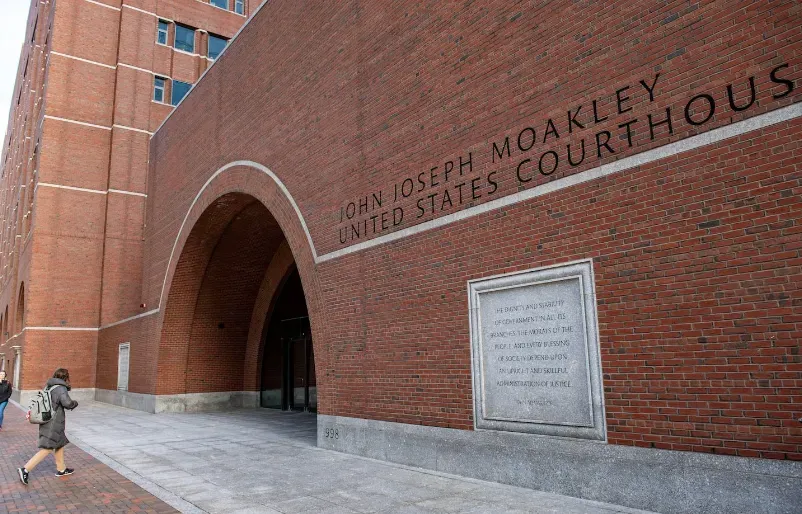
Judge Julia E. Kobick stayed the two CPT guidance documents issued by SEVP on August 12 and August 24, and issued a preliminary injunction protecting the plaintiffs and their member institutions.
On November 16 and 17, the U.S. District Court for the District of Massachusetts handed down two rulings on consecutive days.
On the 16th, Judge F. Dennis Saylor IV vacated DHS's final rule imposing "fixed periods of admission." The four-year cap originally set to take effect on September 15, the requirement to apply to the immigration service for an extension once that period expired, and the cut in the post-graduation grace period from 60 days to 30 — all voided, on the ground that the rule was "arbitrary and capricious and not in accordance with law." This is a final judgment, not a temporary injunction.
On the 17th, Judge Julia E. Kobick stayed the two CPT guidance documents issued by SEVP on August 12 and August 24, and issued a preliminary injunction protecting the plaintiffs and their member institutions.
Two days, two fronts — precisely the two things international students care about most: how long you can stay, and whether you can intern.
I. CPT is back to where it was before August
First, let's be clear about what those two August guidance documents changed.
Their substance comes down to one sentence: CPT would be authorized only for internships "required of all students in the program"; elective courses carrying credit for an internship would no longer count.
The court found that this overturned a 35-year interpretation the federal government had maintained since 1991, without explaining its reasoning and without going through notice-and-comment procedures — a violation of the "change of position" principle.
So within two days, the signal schools received was unambiguous: that August standard is not being enforced, for now.
This was no small-scale friction.
In 2024, more than 130,000 F-1 students obtained work authorization through CPT; Amazon and Tesla were the two largest employers.
The cost of the tightening is documented in numbers: the ruling notes that Columbia rejected more than 120 applicants in the fall term, at least 13 students at Grinnell College lost internships, and students at Cornell and Michigan State have already left school as a result.
II. On the school side, the guidance is starting to shift
NYU Global Services Office (email, November 17):
Explicitly "restoring the CPT rules in effect before August" — students may again apply for CPT for "elective internships or practicum courses that carry academic credit," not just required courses; approvals already granted stand, and students work according to the arrangement listed on page 2 of the I-20; there is also no longer any need to arrange alternative courses in order to route around the August restrictions.
But one sentence sits in the most prominent position: no off-campus training or work — paid or unpaid — may begin until CPT is formally approved and an updated I-20 reflecting that authorization has been received.
University of Pittsburgh OIS (November 17):** the August guidance "no longer applies and is no longer in effect"; the school will restore the CPT policy in force before August 16, 2026, and will email all enrolled students with the specific procedure within a day or two.
Texas A&M (November 17):** the subject line read simply "CPT INJUNCTION GRANTED," stating that the changes brought by the two August broadcasts have been blocked by the preliminary injunction and that the new "no approval unless required of all students" guidance will no longer be enforced. But it also left one noteworthy line: the school will still revise some forms and procedures to ensure it "better and more fully complies with federal requirements."
Other schools are moving noticeably slower.
University of Michigan (November 17) said the injunction "is temporary and does not constitute a final resolution" and advised students not to submit CPT requests for non-degree-required internships for the time being;
Columbia ISSO (November 17) said it is preparing guidance and will hold an online information session, but gave no timeline for restoration;
Barnard College (November 16) pushed its decision to next term — no authorization for spring 2027 either;
Brown University (November) announced it will no longer issue CPT for undergraduates.
Seven schools, one ruling, different speeds.
III. Why such divergent guidance on the same day
1. Different legal character.
The CPT front involves a "stay" plus a preliminary injunction, and the government can appeal; the D/S front is a final judgment, with the rule directly vacated. Schools held back on the former and only dared to change course outright on the latter.
2. The deterrent is still there.
The August 12 guidance named two things: DSOs may bear personal liability, and schools may have their authorization to enroll international students revoked.
The injunction suspends "enforcement"; what schools still weigh when making compliance decisions is that risk. That is exactly what Texas A&M's line about "still revising forms and procedures" means.
3. Restoration does not mean a return to the status quo.
Courses must be re-certified, the rejected batch must be re-reviewed, systems must be changed, staff must be scheduled. Columbia described the workload of responding to student inquiries as "no longer sustainable with existing staffing" — and that sentence is preserved in the ruling itself.
IV. What MentorX has been doing during this period
From August to now, MentorX's active clients have been through a wait that was not short.
In recent days, clients one after another have received notices from their schools of "full restoration of CPT processing" — including at NYU, Pittsburgh and Texas A&M. Our career advisory team has also kept reminding other students to watch their school's official pages closely, and not to judge whether they can apply based on secondhand information circulating in group chats.
Looking back, the "hold steady amid change" approach we held to during this period really came down to one distinction: managing "application" and "authorization" as two separate things.
Authorization belongs to the school, and the school sets the pace; application belongs to the student, and that pace cannot stop.
So we did not tell clients to hit pause. We kept pushing ahead with applications, interviews and networking for summer 2027 internships as usual, marking only the authorization step as "pending confirmation of school procedure."
That judgment has now been borne out by events.
In those weeks when policy was unclear, the most expensive cost was not the waiting — it was shutting down the entire application season. The summer 2027 recruiting cycle will not wait for any policy to land.
By the time schools resume processing, people holding offers and people starting from zero are in completely different positions.
V. What to do right now
1. Start with your own school's emails and pages from after November 17.
If you see explicit language like "restored" or "may apply again," follow the school's procedure. If it only says "monitoring" or "updates to follow," treat it as still paused. A nationwide ruling does not equal your particular school's enforcement posture.
2. If you have received a restoration notice, move fast but don't jump the gun.
You can resubmit and keep applying, and check the "credit" and "required" language in your materials — but do not start work a single day before you hold an updated I-20 with CPT authorization.
3. If your school is still watching and waiting.
Keep submitting applications, hold onto your offers, and write the start date with your employer as "effective upon confirmation of authorization."
4. If your school has tightened (Barnard, Brown), the spring CPT route is already closed.
You can pivot to pre-completion OPT or adjust your term schedule, but calculate the allowance carefully — it shares the same 12 months as post-graduation OPT.
5. On D/S, don't over-read it.
The rule has been vacated and the existing framework remains in force. This is a final judgment, but the government can still appeal; day-to-day visa and entry procedures still follow current rules.
6. Watch three milestones.
The appeal and subsequent rulings in the CPT case, adjustments to spring 2027 course catalogs, and each school's next round of emails.
Two wins in two days changed the rules; whether you can actually intern still depends on that one email from your school.
Give up the "wait and see" mindset in studying abroad. Put academics, visas, job hunting and status planning on the same front-loaded timeline — only then can you protect your own educational and career choices in an increasingly strict policy environment.
If you want to stay in the U.S. successfully, you must set your direction early, build internships and plan your job search as early as possible — don't wait until policy chokes you off to start scrambling.
MentorX provides end-to-end one-on-one support, from policy analysis and career direction planning to resume optimization, interview coaching and referrals to leading employers — helping you clarify your internship and job-search strategy and solve the various challenges along the way.