
 MentorX
 0
0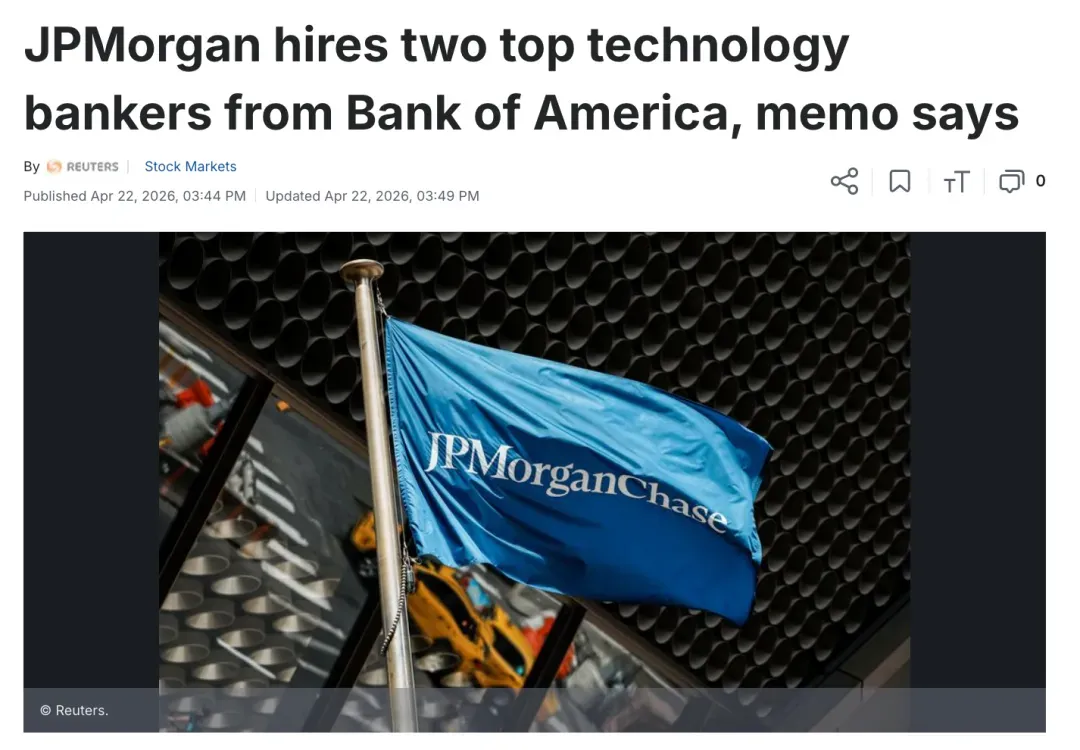
Preparing for finance job applications requires time for accounting, valuation, industry research, English communication and networking. If you pursue multiple tracks at once, you may end up dabbling in each area without a single tangible achievement you can articulate clearly.
This year, several Wall Street banks have been restructuring their technology investment‑banking teams.
In April, JPMorgan hired two senior tech bankers from BofA, covering semiconductors and internet businesses respectively.
In July, Citi announced the recruitment of five Managing Directors for its technology investment‑banking group from BofA, JPMorgan and UBS, whose coverage spans software, semiconductors, AI, payments and other sectors.
These developments reflect senior‑level talent flows and should not be interpreted as evidence of expanded openings for interns or new‑grad candidates. Still, students preparing for U.S. finance job applications can draw on these news stories to examine the sectors banks prioritize, and reflect on how their own backgrounds align with these verticals.
This is especially relevant for students interested in tech investment banking: business‑background candidates need to build industry knowledge, while CS and EE majors must develop an understanding of financial workflows. Regardless of your starting point, you need to be able to break down a company and articulate your views on it.
01 Studying Tech Firms: Understand How They Make Money
When talking about tech investment banking, people often jump straight to buzzwords around AI, chips and other technologies.
Your analysis should not stop at product descriptions. You need to identify who the customers are, why they are willing to pay, and how the firm sells its offerings. Dig deeper to assess the capital required for growth, alongside factors that may shape its profitability and cash flow.
For software companies, start with pricing models, customer composition and renewal metrics. For semiconductor firms, look at product applications, R&D spending and industry cycles. Base your analysis on publicly disclosed information; flag information gaps where data is unavailable.
Business‑background students do not need deep technical expertise from day one. Pick one niche segment, read annual reports for two to three peer companies, compare their revenue streams and operating performance, and gradually build sector literacy.
CS and EE majors can build from technical knowledge they already possess, yet must shift focus toward business‑oriented questions. For instance: how much cost savings can a given technology deliver for clients? What underpins the firm’s competitive moat? What further investments are required to move from R&D to commercialization?
Once you can answer these questions, move on to financing and M&A analysis: why does the company need this capital? Why this particular acquisition target? What business challenges could the transaction resolve?
This level of preparation also gives you concrete substance to answer “Why tech investment banking?” Your academic background supports industry comprehension, but you still need to build competence in financial analysis and deal‑making.
02 Leverage AI for Research — Always Cross‑Verify Outputs
In May, Reuters reported that JPMorgan is rolling out AI tools across its global investment‑banking division. Its Asia‑Pacific investment‑banking head noted that AI can synthesize information and draft materials to boost client‑service efficiency.
Students can practice comparable workflows using public datasets: use AI to summarize annual reports, map out business segments, or generate follow‑up questions for further validation.
Even so, always cross‑check AI outputs against original source documents.
Take “revenue growth” as an example: does this figure refer to full‑year or quarterly performance? Is growth driven by organic operations, or revenue added via acquisitions? Mixing up these metrics will skew your downstream analysis. AI‑generated calculations and citations must be reviewed line by line.
In interviews, if you discuss your use of AI, be transparent: specify what tasks the tool handled, which parts you validated, any errors you spotted, and how you arrived at your final conclusions.
This lets interviewers gauge your actual contributions. Use only publicly available materials for practice, and abide by terms of service for all tools and source content.
This article does not suggest all investment banks impose uniform AI‑skill requirements for candidates. For now, students can integrate AI into their research workflows, while sharpening source‑checking, metric‑interpretation and judgment‑articulation skills.
03 No Relevant Internship? Build an Independent Company Research Project
Without tech‑investment‑banking internship experience, you can complete a well‑defined independent research project. It is no substitute for formal internships, yet it builds industry domain knowledge and gives you talking points for networking and interviews.
Select companies with abundant public disclosures that you are genuinely motivated to learn about. Picking a firm solely because it is trendy often results in output that reads like a news recap.
First, lay out the firm’s core business. Read annual reports and investor presentations, map key products, clients and revenue streams, and benchmark it against several peer players. Paraphrase findings in your own words — test whether someone unfamiliar with the business can follow your logic.
Next, track changes for a handful of business‑relevant financial metrics. Do not dump every data point you find; each metric should serve a specific analytical question. Note years, units and sources, and distinguish between official corporate disclosures and your own assumptions when explaining observations.
If the company has public financing or M&A deals, read deal announcements to unpack transaction rationales and risks. For pending transactions, clearly state their current status, and do not frame projected synergies as realized outcomes.
Condense your research into a concise memo, documenting core findings, supporting evidence and unresolved open questions. Practice presenting your analysis in English.
Once your draft is ready, ask others to challenge your conclusions. Questions such as “Why did you select these peer comparables?” or “What supports this assumption?” will surface gaps in your research that require further data gathering.
You do not need to study dozens of companies. Fully grasping the link between one firm’s business fundamentals and its financials is substantial work in itself.
04 Conducting Research Is Not Enough — Be Able to Communicate It in Job Hunting
After finishing your project, revisit what appears on your resume.
Generic bullet points such as “researched the tech sector” or “analyzed corporate financials” give readers little sense of your actual work. Specify your research subjects, analytical methodologies and deliverables to add granularity to your experience. Be honest that this is independent work; never misrepresent it as bank internship or live‑deal experience.
You can leverage this research for networking. Prepare questions centered on clients covered by the team and approaches to building industry expertise, instead of opening every conversation with “Could you walk me through your day‑to‑day work?”
When prepping for interviews, reflect on your project: why you chose this sector, key takeaways from your research, and instances where new information revised your prior judgments. Feel free to mention unresolved questions, along with how you would go about investigating them.
These talking points lead to more substantive conversations, and help you assess whether you want to keep diving into this field.
Double‑check application eligibility well in advance. Confirm cohort requirements, work locations, deadlines, and work‑authorization / sponsorship rules directly on official job pages. A bank’s emphasis on tech‑focused business does not mean all related roles are open to international applicants.
05 Prioritize Your Preparation Tasks
Preparing for finance job applications demands time for accounting, valuation, industry research, English proficiency and networking. If you pursue too many threads simultaneously, you risk dabbling superficially in every area without producing a single well‑articulated deliverable.
Start by mapping your target roles against your existing background.
Business‑background students drawn to a sector can kick off with company‑level research. STEM candidates with technical fluency can prioritize financial‑analysis practice and business‑oriented communication. Your starting point depends on your current skill set and application timelines.
Vineadviser’s career coaching supports these objectives: we discuss target career paths based on your major, year in school and prior experience, identify preparation gaps, and drive progress through project refinement, resume revisions and mock interviews. We help students clarify actionable next steps and confidently articulate work they have completed.
If you are exploring U.S.‑based finance opportunities, share your major, academic standing and past experience to walk through a customized preparation roadmap with Vineadviser. Final eligibility is subject to official job requirements. Coaching services do not guarantee interviews or offers.