
 MentorX
 0
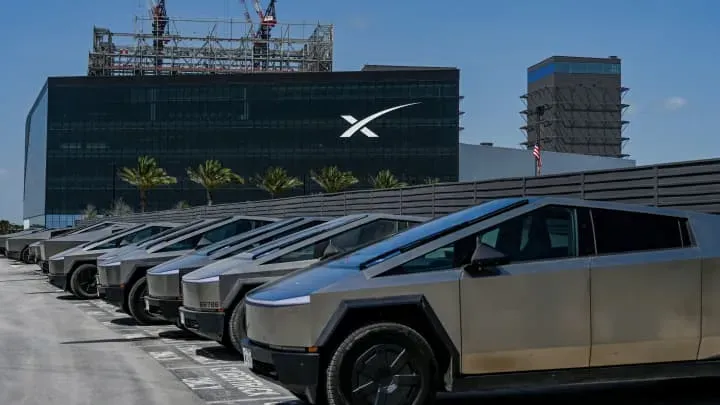
After market close on October 20, ET, SpaceX released its first genuinely profitable earnings report since going public in June: quarterly revenue hit $14.58 billion, surging 161% year over year, with a net profit of $4.4 billion — swinging sharply from a $1.05 billion loss in the same period last year.
After market close on October 20, Eastern Time, SpaceX released its first truly profitable earnings report since its June IPO: quarterly revenue reached $14.58 billion, surging 161% year over year, with a net profit of $4.4 billion, reversing a $1.05 billion loss recorded in the same period last year.
More explosive than the financial figures was another confirmation Elon Musk made live on the earnings call: Tesla and SpaceX are exploring a potential merger, and boards of both companies have formed special committees composed of independent directors. As a shareholder with stakes in both firms, Musk is conflicted and will recuse himself from related discussions.
01 What Just Happened: A Merger of the World’s Most Powerful Tech Players Hits the Table
First, the standout signal from this earnings release:
After SpaceX rebranded its AI division as Superintelligence (SI), the unit posted quarterly revenue of $7.56 billion, skyrocketing 830% year over year and nearly tripling quarter-over-quarter. For the first time in history, it outpaced Starlink’s $5.25 billion to become SpaceX’s largest revenue stream.
Its compute capacity has expanded to 1.7 GW. The firm recently acquired AI coding tool Cursor at roughly a $60 billion valuation and launched its agentic system, Grok Bot.
Musk stated on the call that a merger “would be highly beneficial for developing superintelligence software.” Synergies would center on AI software, chip design, robotics, connectivity, and the joint Terafab megafab chip plant being built by both companies.
Valued at Tuesday’s closing prices, the combined entity would command a market cap of approximately $3.5 trillion — around $2 trillion for SpaceX and nearly $1.5 trillion for Tesla — ranking it among the largest mergers in history.
Following the announcement, SpaceX shares rose more than 5% in after-hours trading, while Tesla edged up roughly 1%.
Important caveat: this is only an option under consideration and is far from finalized.
02 Key Hurdles: Why the Deal Is Far From Sealed
Musk repeatedly emphasized, “This is not a done deal.” The special committees are staffed by independent directors. He described the process as “an odd kabuki dance, with two groups negotiating while I’m locked out of the room,” adding that anyone treating the merger as a foregone conclusion is overstating the facts.
The barriers are substantial. Tesla requires approval from more than 50% of all outstanding common shares, not just a simple majority of voting shareholders — a bar Musk called “quite high.” He personally holds roughly 20% of Tesla and about 45% of SpaceX (controlling around 82% of SpaceX’s voting power). Post-merger, he would own approximately one-third of the combined company.
The two firms are already deeply intertwined: Tesla has invested $2 billion into SpaceX, and many board members hold cross-company stakes.
The timing is notable. Tesla filed its annual proxy statement on Monday with no merger proposal included. This looks less like a signed contract waiting for execution and more like market and shareholder priming.
03 What Is the Strategic Rationale Behind the Merger?
The earnings report itself lays out the core logic, with three clear pillars behind SpaceX’s momentum this quarter.
First pillar: Superintelligence.
SI delivered $7.56 billion in quarterly revenue with adjusted EBITDA of roughly $5 billion and 1.7 GW of compute capacity. The division has acquired Cursor and rolled out Grok Bot.
Tesla’s autonomous driving and robotics roadmaps rely precisely on end-to-end foundation models, custom silicon and massive compute capacity — this forms the strongest narrative for the merger.
Second pillar: connectivity and space.
Starlink serves 13.6 million consumer users across 174 countries, with roughly 11,000 satellites in orbit. This quarter marked its first revenue-generating Starship mission, deploying 26 V3 satellites in a single launch with downstream bandwidth roughly 10 times that of Falcon 9.
Tesla’s vehicle infotainment systems and autonomous fleet pair naturally with Starlink’s global connectivity network.
Third pillar: manufacturing and supply chains.
The two are building the Terafab chip plant together. SpaceX leverages Tesla’s battery energy storage, while Tesla integrates the Grok assistant. A merger would unlock pooled capital, aligned R&D timelines and greater demand for elite engineering and technical talent.
The merger may or may not close, yet the industry direction is unambiguous: Musk’s vision of a “superintelligence singularity” is weaving AI, space, semiconductors and robotics into one integrated stack.
04 Three Signals for the Job Market — Critical for International Students
For families of international students mapping overseas education and career plans, this news is more than financial gossip. It delivers three actionable signals for early positioning.
Signal 1: Demand for AI and deep tech talent continues to surge.
SpaceX’s SI revenue has multiplied more than eightfold year over year, its compute footprint hits 1.7 GW, and it keeps signing cloud service agreements while building its own fabs.
Roles in superintelligence, chip design, foundation models and aerospace engineering are rapidly growing scarcer. Students with solid backgrounds in algorithms, systems engineering and data science gain stronger negotiating leverage in U.S. job searches.
Signal 2: Hybrid profiles outperform siloed technical skills.
This merger is fundamentally a playbook for integrating AI software, compute hardware, global connectivity and robotics. Even SpaceX is acquiring AI coding platforms like Cursor and building its own large models.
Employers increasingly favour versatile engineers who also understand business use cases. Cross-disciplinary projects and internships during university carry more weight than GPA alone.
Signal 3: Competition for tech roles starts long before graduation.
More openings do not equal lower barriers.
At capital-intensive firms such as SpaceX, with annual Capex close to $50 billion, coveted roles are often locked in via internships and campus recruiting a full year before graduation. Students with earlier, sharper career planning move to the front of candidate pipelines.
Closing Thoughts
Whether this merger materializes hinges on shareholder votes, regulatory reviews and further negotiations. One trend is already certain: SpaceX’s first profitable earnings report proves deep tech and AI are reshaping the employment landscape. For international students, competitive advantage comes increasingly from forward planning rather than last-minute scrambles.
Vinead Education supports international students pursuing overseas careers across tech, finance, consulting and other sectors in the U.S. and globally. We offer end-to-end support including career assessments, internship referrals, resume refinement and interview coaching, helping students translate academic strengths into tangible offer outcomes amid shifting market conditions.
Follow Vinead Education for more career insights on North America’s tech industry.