
 MentorX
 2
2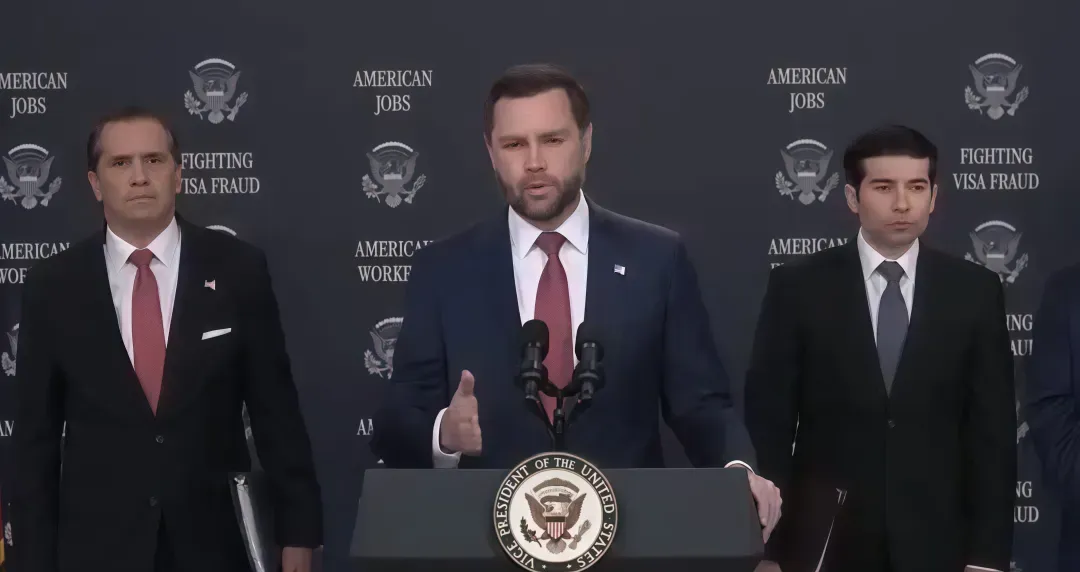
On October 8 local time, the U.S. government rolled out two major actions simultaneously. One targets the employment‑based green card pathways for leading tech companies, while the other launches a subpoena investigation into J‑1 exchange visitor programs at nine top universities including Harvard, MIT and Stanford.
On October 8 local time, the U.S. government rolled out two major actions simultaneously. One targets employment‑based green card pathways for leading tech firms, while the other launches a subpoena investigation into J‑1 exchange visitor programs at nine top universities including Harvard, MIT and Stanford.
Though the two incidents appear separate, they share the same underlying logic: tightening the foreign‑worker system and reinforcing the “American workers first” principle. This will profoundly affect skilled foreign professionals working in the U.S., as well as Chinese students planning to pursue PhD studies and research careers in the United States.
01 Core Development I: PERM labor certification for eight tech companies suspended indefinitely
The U.S. Vice President Vance and Secretary of Labor jointly announced that the Department of Labor (DOL) will suspend PERM processing for eight companies: Microsoft, Adobe, Cognizant, Infosys, Tata Consultancy Services, Wipro, HCL Technologies and Capgemini. The DOL will no longer accept new filings. All pending PERM cases previously submitted will be frozen indefinitely, with no timeline set for resumption.
Many international students confuse related concepts, so here is a concise breakdown: PERM (Program Electronic Review Management), or permanent labor certification, is the mandatory first step for H‑1B holders seeking employer‑sponsored employment‑based green cards under EB‑2 / EB‑3 categories. Employers must complete statutorily required recruitment procedures to prove that no qualified U.S. workers are available for the role, and commit to paying the prevailing industry wage to the foreign worker to obtain PERM approval. Only after securing PERM approval may the employer file the I‑140 immigrant petition to enter the green card priority date queue.
⚠️ Critical Distinctions (frequently misinterpreted):
1. H‑1B work authorization itself is unaffected by this suspension:
Existing H‑1B visas and H‑1B extension eligibility remain intact; employees may continue working legally in the United States.
2. Employees with already approved PERM and I‑140 petitions face no disruption:
Those holding approved PERM and I‑140 filings retain their priority dates, and their green card process will continue moving forward.
3. Affected population:
H‑1B employees at these eight firms who have not yet filed PERM, or whose PERM applications are currently under DOL review. Their green card applications via employer sponsorship are immediately stalled with no way to advance this pathway.
The core official allegation is visa‑program abuse. Vice President Vance publicly singled out Microsoft, questioning how the company could lay off large numbers of domestic workers while continuing to file massive volumes of H‑1B petitions to replace laid‑off U.S. staff with foreign employees.
Data shows Microsoft cut 6,000 domestic employees in 2025, while securing approvals for over 6,000 H‑1B petitions during the same period, with nearly 1,000 petitions corresponding to roles eliminated in the layoffs. Microsoft responded that most H‑1B applications were extensions for existing staff rather than hires for new positions.
02 Core Development II: Nine elite universities under J‑1 visa investigation
On the same day, the Department of Labor issued subpoenas to nine renowned universities to launch a targeted investigation into J‑1 visa abuse. The list includes Harvard University, MIT, Stanford University, Yale University, Brown University, University of Pittsburgh, UC Davis, Caltech and Arizona State University.
The J‑1 exchange visitor visa is widely used for postdocs, research assistants and visiting scholars in U.S. university labs. It also serves as the immigration status for many STEM PhD students participating in research projects during their doctoral studies.
The government’s central concern: universities rely heavily on J‑1 foreign researchers to suppress wages for research roles and crowd out employment opportunities for U.S. graduate students and researchers.
Official statistics state that J‑1 foreign personnel account for as high as 61% of federally funded research positions at the investigated universities, far above the national average of 38%.
The DOL Inspector General explicitly stated: elite university status cannot serve as a “get‑out‑of‑jail‑free card” to bypass labor laws, and federal research funding must not be used to hire foreign researchers at artificially low pay in a roundabout manner.
Important clarification: This investigation does not mean immediate shutdown of J‑1 programs, nor is it a formal fraud ruling. This is merely the evidence‑gathering and subpoena phase. Regulators will decide on penalties or J‑1 eligibility restrictions based on collected evidence at a later stage.
Still, the policy signal is unambiguous: the previously lenient J‑1 employment environment within academic research circles will face rigorous scrutiny.
For Chinese STEM applicants, the most direct impact: stricter J‑1 vetting for PhD, postdoc and laboratory research assistant positions. Universities will exercise greater caution when recruiting foreign researchers, raising thresholds for job offers and visa document reviews.
03 Underlying Logic: U.S. talent policy shifts from “attracting global talent” to “American workers first”
These concurrent developments are not isolated incidents but a continuation of years of tightening immigration policy.
For decades, U.S. tech and academic research systems have heavily depended on foreign talent: the H‑1B program fuels Silicon Valley engineering teams, while J‑1 supports postdocs and research labor at top laboratories. The premise of this system was that foreign talent fills gaps in the domestic workforce.
The core policy pivot today: rigorous verification of whether genuine shortages of U.S. workers exist, and prevention of companies and universities using visa programs to suppress wages and replace domestic labor.
This policy shift carries two sides and requires objective assessment:
Short‑term: For tech professionals and STEM researchers working in the U.S., employer‑sponsored green card pathways narrow, and visa uncertainty for research roles rises.
Long‑term: The door for foreign talent is not fully closed; instead, compliance standards are raised and visa abuse is targeted. Pathways remain open for compliant, scarce, high‑value talent, but screening criteria grow far stricter.
04 Practical Takeaways for International Students Planning U.S. Studies & Careers
Current / Prospective U.S. International Students
1. Do not over-rely solely on the H‑1B + employer‑sponsored PERM green card career path
If targeting large tech companies, do not assume your employer will reliably file PERM after hiring.
Prioritize reviewing an employer’s immigration compliance track record. Also research alternative immigration pathways in advance, such as the National Interest Waiver (NIW), which does not require employer sponsorship, to diversify risks.
2. Treat J‑1 status risks seriously when applying for PhD and postdoctoral roles in STEM
J‑1 program reviews at university labs will become stricter. During outreach and advisor selection, proactively inquire about the lab’s foreign staffing practices. After receiving J‑1 status, strictly adhere to all J‑1 terms, maintain complete documentation and avoid immigration status violations.
3. Build a more robust STEM OPT internship strategy
STEM OPT remains a critical stepping stone for international graduates seeking U.S. work after graduation. However, amid the broader policy climate, employers hiring foreign graduates will more carefully evaluate labor compliance risks. Boosting technical capabilities and building irreplaceable expertise while still in school is the most effective hedge against policy volatility.
Chinese Nationals Already Working in the U.S. on H‑1B
First, confirm the stage of your PERM / I‑140 petition to gauge personal exposure.
If employed by one of the eight firms subject to the PERM suspension, consult an immigration attorney early to evaluate contingency options including internal transfers or switching to other compliant employers.
H‑1B extensions remain available; avoid excessive panic, but allocate extra time and prepare backup options for your green card roadmap.
05 Summary of Application Strategy
The core trend in U.S. visa policy: eligibility to maintain immigration status stays relatively stable, yet securing permanent residency via green cards grows increasingly difficult. Short‑term policy volatility brings uncertainty, but it does not completely shut the door on U.S. employment for international talent.
Future U.S. career pathways will favor truly rare talent with irreplaceable specialized skills. Pathways that simply rely on job placement and waiting for employer sponsorship for a green card will carry steadily rising uncertainty.
Disclaimer: This article provides policy commentary only and **does not constitute immigration legal advice**. For personalized visa and green card strategies, consult a licensed U.S. immigration attorney.
Closing Discussion Prompt:
What is your view on this PERM freeze and the J‑1 investigations at elite universities? When planning your U.S. career, would you prioritize large tech corporations or academic research tracks? Feel free to share your plans in the comments.