
 MentorX
 1
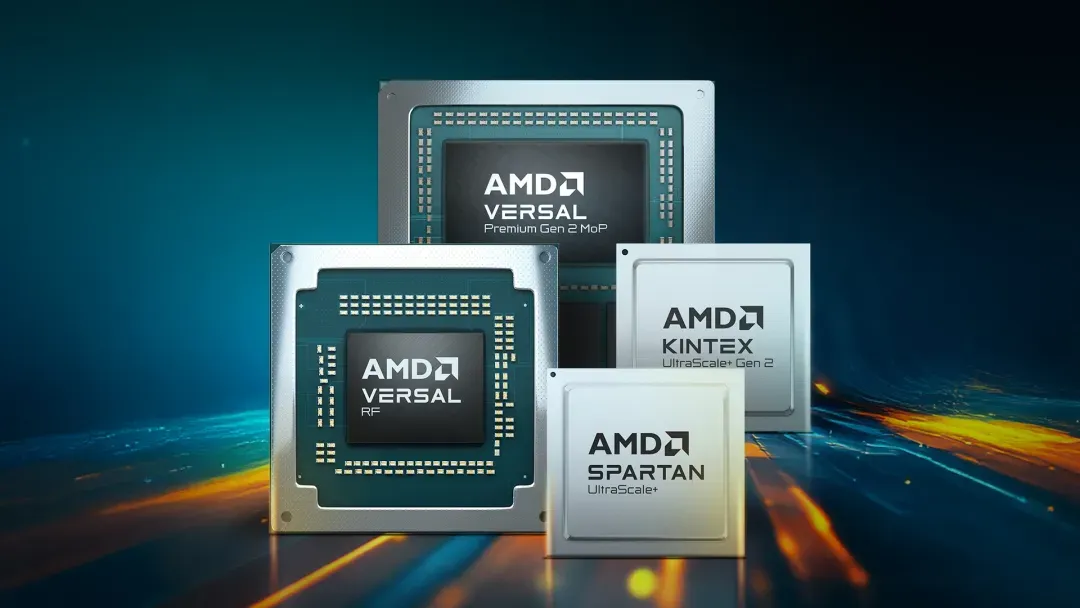
After market close on November 3, 2026, AMD released a near‑flawless quarterly report: revenue hit $13.377 billion, representing a 45‑percent year‑over‑year increase.
After market close on November 3, 2026, AMD released a near‑flawless quarterly earnings report. Revenue hit $13.377 billion, up 45 % year‑over‑year and beating the upper end of guidance. Its data‑center business nearly doubled, and after‑hours stock price once surged 9 %.
Impressive as these figures are, three underlying dynamics merit deeper analysis: AMD is undergoing a structural transformation, its earnings quality is improving, and its 2027 outlook lays out the company’s long‑term trajectory.
01 The Numbers: Revenue Is Not the Only Beat
Revenue stood at $13.377 billion, up 45 % year‑over‑year and 16 % quarter‑over‑quarter, surpassing the top of its prior guidance range of $12.7‑13.3 billion. GAAP net income reached $2.428 billion, rising 95 % YoY. Non‑GAAP EPS came in at $2.09, exceeding Wall Street consensus forecasts. GAAP gross margin hit 54 %, a 2‑percentage‑point increase year‑over‑year.
For the fourth quarter, AMD provided revenue guidance with a midpoint of $17 billion — +66 % YoY and +27 % QoQ, also topping market expectations. The strength of this earnings release lies in broad‑based outperformance across revenue, profits, gross margins and forward guidance, rather than one‑off strength in a single metric.
02 Core Growth Engine: Data‑Center Revenue Nearly Doubles, Accounting for 64 % of Total Revenue
The data‑center segment generated $8.546 billion in revenue, jumping 97 % YoY to an all‑time high. Its share of total revenue leapt from 47 % in the same period last year to 64 %. For every $10 AMD earns, more than $6 now comes from its data‑center division.
Growth was driven by momentum across two product lines: robust demand for EPYC server CPUs and record‑breaking sales from the Instinct MI450‑series GPUs.
More critically, AMD has begun volume shipments of the MI455X GPU. Its Helios rack‑scale solutions are already running within the infrastructure of Anthropic, Meta, Microsoft, OpenAI and Oracle, with substantial deployment increases scheduled for Q4.
In the AI landscape, AMD is no longer merely an alternative to NVIDIA. It has embedded its system‑level solutions among hyperscale customers.
03 Earnings Quality: No Growth Through Price‑for‑Volume Trade‑Offs
High‑growth businesses face the risk of rising revenue without expanding profits. AMD’s numbers ease this concern. The data‑center segment posted $2.882 billion in operating profit (+168 % YoY), representing a 34 % operating margin. The company‑wide non‑GAAP operating margin expanded from 24 % to 29 %.
This demonstrates growth stemming from improved product mix and economies of scale, rather than sacrificing pricing to capture market share. Lisa Su also projects that the data‑center business will more than double in size for full‑year 2026.
04 The Flip Side: PC Headwinds and Supply‑Chain Tightness
The Client and Gaming segment brought in $3.722 billion in revenue, down 8 % YoY. Within this, gaming revenue plummeted 40 % to $773 million. Lisa Su forecasts double‑digit percentage declines in PC unit shipments for 2027. Rising component costs push up overall system pricing, making consumers more price‑sensitive.
This represents a structural shift. Surging memory‑chip demand from AI data‑center build‑outs is squeezing supply chains for traditional PCs. Nevertheless, AMD views PC weakness as a counter‑balance to data‑center expansion. Gains within data‑center and embedded businesses are expected to offset declines in client‑side CPUs.
On supply chains, Lisa Su confirmed that AMD is securing critical components including wafers, substrates, advanced packaging and memory. The subtext: demand is not the limiting factor; supply is.
Free cash flow fell to $550 million this quarter (‑64 % YoY), while inventories rose by roughly $3 billion. Markets largely shrugged off these figures. During capacity ramp‑up phases, higher inventory is interpreted as growth‑driven stocking rather than operational deterioration.
05 2027 Signals: What AMD Aims to Become
While the Q3 earnings report reflects present‑day performance, the 2027 outlook articulates AMD’s strategic destination:
- Revenue growth exceeding 80 %, more than twice the growth anticipated at the end of last year;
- Data‑center business contributing over 80 % of total revenue; server‑CPU revenue doubling year‑over‑year, and data‑center AI revenue more than doubling.
This communicates a clear message to markets: AMD intends not only to compete for AI‑accelerator market share but also to execute structural displacement of Intel within server‑CPU markets.
One easily overlooked angle is AI‑agent‑driven CPU demand.
According to Lisa Su, server CPUs are critical for AI‑agent workloads, enabling virtual machines to operate autonomously for hours. CPU adoption for such use cases is still in its early stages.
This points to a dual‑engine model: AI inference requires both the massive parallel compute power of GPUs and high‑performance CPUs to orchestrate complex workflows.
Closing: Three Key Takeaways
When analyzing these earnings, focus less on after‑hours stock swings and more on three core observations.
First, when evaluating the health of AI‑compute firms, look beyond top‑line revenue to segment mix and operating margins. The 64 % data‑center revenue share alongside a 34 % segment operating margin captures the real substance behind this earnings beat.
Second, structural transformation is underway. AMD is evolving from a CPU‑centric company into a data‑center‑first enterprise, with its 2027 guidance spelling out that end state.
Third, industry‑wide supply‑chain constraints — higher memory prices and demand outstripping supply — define the current landscape. Whomever resolves supply bottlenecks will seize the initiative for the next phase of competition.
More cautiously: AMD’s growth is not a one‑sided bet on GPUs. It has built a dual‑engine capability at the intersection of CPUs and GPUs. This thesis hinges on sustained AI capital expenditure and on‑schedule Helios ramp‑up. The projected double‑digit PC downturn remains a variable requiring ongoing monitoring.
06 A Note for International Students
This earnings release sends a clear signal to job seekers: AI‑compute growth is concentrating within data‑centers, chip design, supply chains and system integration. Roles in these areas offer greater stability and faster growth than consumer‑facing end‑product positions.
Rather than chasing vague, broad AI buzzwords, international students should ground technical skills in three concrete directions:
1. GPU / CPU performance and deployment (e.g. CUDA, system‑level tuning);
2. Data‑center infrastructure and cloud technologies;
3. Semiconductor supply‑chain management.
If you would like to systematically map your background against competency requirements and job‑search timelines for these roles, reach out for targeted career‑planning advice.