
 MentorX
 1
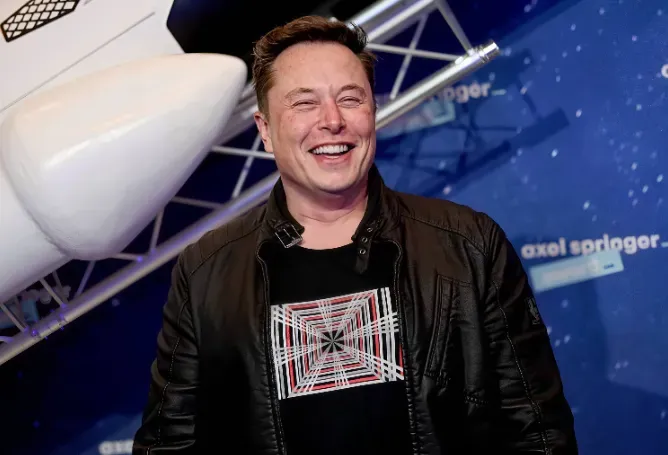
On one hand, ahead of its IPO, Anthropic announced it would allocate 5 % of its equity to a new philanthropic fund. Based on its latest valuation, this stake is worth approximately $48 billion, equivalent to around RMB 320.69 billion. On the other hand, Elon Musk announced on X that next year he will gift SpaceX shares to every child across the United States, with an aggregate value of roughly $10.5 billion, or about RMB 70.2 billion.
Over this weekend, two seemingly unrelated announcements emerged almost simultaneously.
On one hand, ahead of its IPO, Anthropic announced it would allocate 5 % of its equity to a newly‑established philanthropic fund. Based on its latest valuation, this stake is worth approximately $48 billion, equivalent to around RMB 320.69 billion. On the other hand, Elon Musk posted on X that he will gift SpaceX shares to every child across the United States next year, with an aggregate value of roughly $10.5 billion, or about RMB 70.2 billion.
Both point to an emerging question: How should the enormous wealth generated by AI and cutting‑edge technology be distributed among ordinary people?
01 Two Declarations About “Giving Away Equity”
Let us start with Anthropic. Founded in 2021 by seven former OpenAI employees, the company has long positioned itself as “a force for good”.
Ahead of its sizable IPO, it is responding to mounting public anxiety:
It will place 5 % of its equity into a new philanthropic fund, and add a further 2 % stake each time its valuation rises by 50 % above an undisclosed baseline. At its roughly $965 billion valuation, the initial tranche of shares is valued at about $48 billion.
How will these funds be used? Anthropic states the philanthropic fund will expand work in AI safety and biomedical research. It also intends to pursue bolder approaches toward issues such as AI‑driven job displacement: making large‑scale donations to traditional non‑profit organisations and even providing direct cash disbursements to targeted groups. The founders have pledged to donate 80 % of their personal equity holdings.
Now turning to Musk. He wrote on X: “Next year, I will give one share of my SpaceX stock to every child in America.” Based on an estimated 72‑73 million U.S. children aged 0‑17 and a SpaceX share price of $146.03, the gift totals approximately $10.5 billion. He added: “This will be the first of many gifts.”
02 Why This Exact Timing
The parallel timing of these two developments is no coincidence. They share a common backdrop: growing public backlash against AI.
Concerns centre on three areas: AI‑driven job threats, resource and environmental pressures from accelerated data‑centre construction, and the risk of catastrophic outcomes should technology spiral out of control.
In filings submitted to regulators, Anthropic also warns investors that advanced models may exhibit unpredictable behaviours including manipulation and extortion. The company even acknowledges that “artificial intelligence poses existential risks to humanity”.
Against this backdrop, transferring a portion of equity toward public‑oriented purposes serves as a deliberate conciliatory gesture, addressing a sharp question: Why should wealth created by AI belong only to a small number of companies and individuals?
This is not an unprecedented move. This past summer, rival OpenAI also debated a proposal to place roughly 5 % of its shares under public ownership.
03 Two Approaches, One Core Divide
Musk’s and Anthropic’s moves appear similar on the surface yet diverge fundamentally.
Musk’s stance is straightforward. Shortly after Anthropic’s announcement, he posted that shares “should go directly to the public” and noted he “would pursue that same path”: letting wealth flow to individuals in the simplest, most transparent fashion.
Anthropic takes an alternative route. Its new philanthropic fund will operate as a wholly‑owned limited‑liability company, rather than a tax‑exempt charity, and investment decisions rest with the fund itself. The company states it will dedicate an increasing proportion of its resources to philanthropic objectives as it grows.
The core point of contention: Who should oversee the redistribution of AI‑generated gains, and what mechanisms ought to be used?
Direct distribution offers greater transparency, yet raises challenges around fairness and scalable execution.
Managed philanthropy enables more sophisticated programmes and larger‑scale projects, while public oversight and transparency remain unresolved questions. This represents an ongoing distribution experiment with no definitive answers.
04 Key Developments Worth Monitoring
Substantive implementation details matter far more than public statements.
First, Anthropic has said it will release the fund’s organisational structure, governance framework, and valuation milestones that trigger additional equity contributions in the coming months. These fine‑grained rules will determine whether its philanthropic commitments amount to empty rhetoric or tangible resources.
Second: Where will the capital ultimately flow? Will it fund non‑profit organisations, or deliver direct payments to specific groups? These choices define how meaningfully “distribution to the public” can materialise.
Third, Anthropic has also been lobbying U.S. lawmakers over a draft AI safety and security bill. The draft would grant courts authority to ban the release of high‑risk models lacking adequate safeguards. Though still preliminary, it signals AI governance shifting from corporate self‑regulation toward formal public rules.
Closing Thoughts
When leading‑edge technology companies begin debating “giving equity to the public”, one signal becomes unambiguous: in the AI‑wealth‑generation era, profit distribution has for the first time become a public‑policy issue.
Promises come easily; delivery proves difficult.
Moving forward, what counts is not who makes the loudest claims, but whether fund governance remains transparent, whether capital delivers real‑world impact, and whether regulations can keep pace with technological advancement.
For general readers, this offers an early vantage point for understanding shifting power dynamics and benefit structures within the AI era.