
 MentorX
 101
101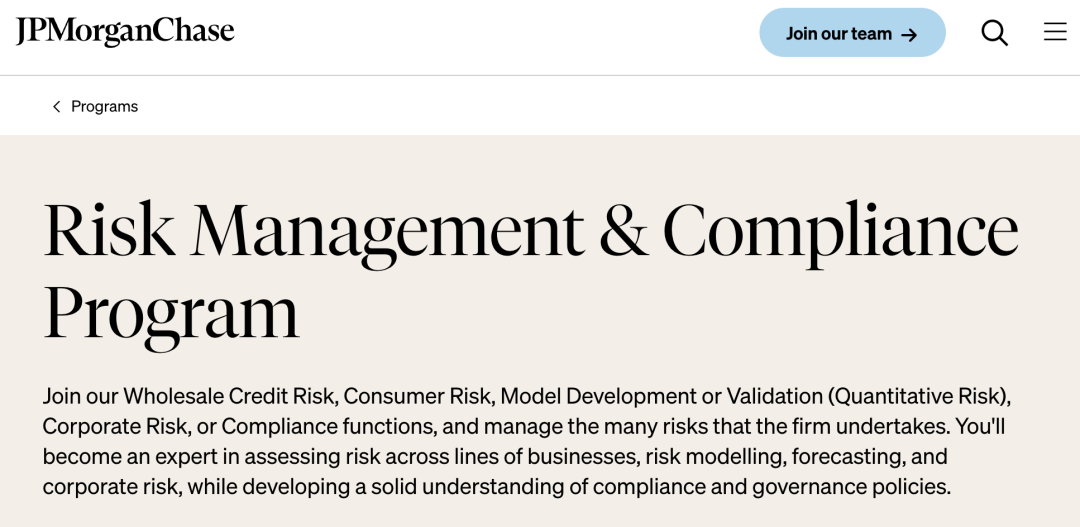
JPMorgan Chase CEO Jamie Dimon stated during JPMorgan’s China Summit in Shanghai that as AI accelerates its integration into banking operations, the bank may hire more AI specialists in the future while scaling back recruitment for certain categories of traditional bankers.
For many international students majoring in finance, the path to Wall Street has long been clear: study finance, build financial models, drill technical interview questions, and land an internship. Now, Wall Street is rewriting its talent criteria.
Recently, JPMorgan Chase CEO Jamie Dimon remarked at JPMorgan’s China Summit in Shanghai that as AI accelerates its integration into banking operations, the bank may recruit more AI specialists while scaling back hiring for certain categories of traditional bankers. He also stated plainly that while AI may eliminate some roles in the long run, it will boost productivity for the employees who remain.
This comment easily triggers anxiety among finance international students: Will banks stop hiring in the future? Is a Finance degree still valuable? But Dimon specified “certain categories,” not all roles. He added that JPMorgan will manage this transition gradually through training, internal transfers and natural attrition.
01 What banks are cutting is not bankers, but repetitive execution capabilities
A large share of banking work revolves around information gathering, data reconciliation, document compilation, preliminary analysis and standardized workflows. Previously, these tasks consumed massive team time. Today, AI is being deployed across marketing, risk management, fraud detection, document processing and other use cases. Dimon described current applications as merely “the tip of the iceberg.”
A more accurate interpretation is not that “AI will replace entire investment banking teams.” Instead, enterprises are re-evaluating the value of every type of work: which steps can be automated, which require human judgment, and which roles should be retained.
Tasks with well-defined rules, stable workflows and fixed deliverables will see headcount reduction first driven by AI. This is a trend assessment based on JPMorgan’s public AI roadmap and does not mean any specific role has already been eliminated. Client communication, complex transaction evaluation and risk decisions still demand professionals who understand business logic and accountability boundaries.
Even among candidates with finance backgrounds, the value gap will keep widening between those who only follow templates and those who can leverage data and AI to optimize workflows, validate outputs and interpret results.
02 The “AI talent” banks seek are not merely algorithm engineers
When many finance students read “hiring more AI talent,” their first thought is: these opportunities belong to Computer Science majors and have nothing to do with me.
In reality, AI work within financial institutions covers far more than model training. It also includes data analytics, quantitative research, model validation, model risk management, workflow automation and tech product development.
JPMorgan’s student program in Risk & Compliance involves model development, model validation, risk modeling and forecasting. It prioritizes corporate finance and risk assessment, analytical skills, programming and statistical proficiency.
Banks do not only want “the best coders.” They need professionals who can translate financial problems into data problems and explain outcomes to business teams. Finance, economics and business analytics students do not need to blindly switch to computer science. A more practical route is to build data and AI capabilities on top of their existing domain expertise.
03 Many finance international students are not unfamiliar with AI — they fail to apply it to real work
Many students still use traditional resume templates: listing corporate finance knowledge, Excel, DCF and three-statement modeling, then simply adding “ChatGPT” under technical skills.
The problem is that “having used AI tools” barely serves as a competitive advantage anymore.
Hiring managers care more about whether you can identify genuine business problems, process data with Python or other tools, assess the reliability of AI outputs, and explain findings to non-technical stakeholders.
JPMorgan noted in its 2025 annual report that AI will impact nearly all of the firm’s functions, applications and workflows. The bank will continue training, redeploying and reallocating talent as technology and productivity evolve.
AI proficiency is evolving from a bonus qualification for a small group of technical roles into a standard working competency across more finance positions. If your resume only highlights “reports completed” without clarifying how you improved analytical quality or supported decision-making, it will be hard to demonstrate your long-term value.
04 What Finance students should build is more than just an AI label
1. Master foundational skills including Python, SQL, data cleaning and visualization. The goal is not to compete with CS majors on algorithms, but to independently solve data problems in financial contexts.
2. Build a project with clear business value, such as compiling public financial statement datasets, comparing corporate metrics or analyzing risk variables. What matters is not whether the project title contains “AI”, but whether the research question, methodology, results and limitations are clearly laid out. Do not fabricate accuracy or efficiency gains.
3. Revise resume wording. Reduce generic phrases like “proficient in ChatGPT”. Instead, describe what problems you solved, your specific responsibilities, how you validated results, and how your deliverables supported business judgments. AI tools are a method, not the end achievement.
4. Broaden your job search scope. Beyond traditional tracks such as Investment Banking and Asset Management, look into cross-functional roles blending finance and technology: Data & Analytics, Quantitative Research, Model Risk, Technology Product, etc. Still, you must check each live job posting individually to confirm role availability, eligible graduation cohorts and sponsorship for international students; broad corporate trends cannot guarantee individual openings.
Lastly, do not neglect core finance fundamentals while learning AI.
Technology helps process information, yet it cannot build industry judgment, understand client needs or bear accountability for decisions. High-caliber professionals know when to deploy AI — and when not to trust it.
Dimon’s remarks do not announce that finance degrees are “doomed.” They serve as a reminder for incoming finance professionals: job titles may stay the same, but the work inside these roles is already transforming.
The real risk is not majoring in finance, but remaining trapped in the outdated template of a traditional banker.
As banks redesign workflows with AI, international students need to answer a more pragmatic question: if repetitive execution is no longer a scarce skill, what unique judgment, connections and value can only you bring to the team?