
 MentorX
 0
0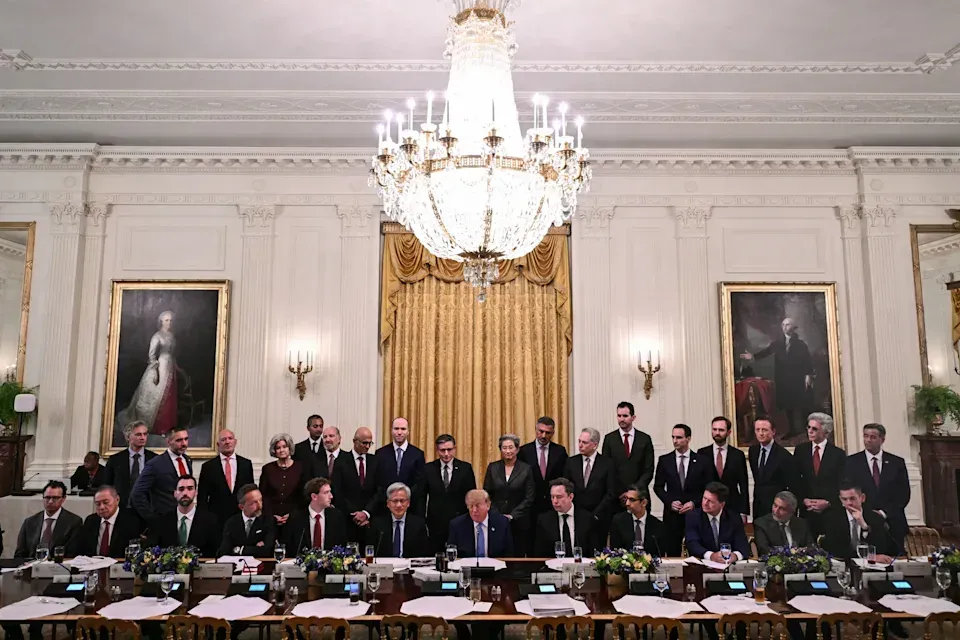
This agreement constitutes a voluntary industry commitment, not congressional legislation, and carries no binding legal force. Signatory tech companies voluntarily pledge to build a multi‑layered safety guardrail framework for cutting‑edge superintelligence models, embedding risk controls throughout the entire model‑development lifecycle.
A special luncheon gathering top global AI‑industry leaders was recently held at the White House.
Dubbed within the industry the “Superintelligence Lunch”, the event saw the release of the *White House Superintelligence Pact*. An executive order was also signed mandating that within U.S. federal‑government official documents, “AI (Artificial Intelligence)” be formally renamed “SI (Super‑Intelligence)”. Upon publication, the news sparked widespread discussion across global tech circles.
Many readers may first fixate on the “name‑change” announcement. Yet the rebranding is merely a symbolic surface‑level move; the Superintelligence Pact collectively signed by participating companies represents the meeting’s real core deliverable.
This agreement constitutes a voluntary industry commitment, not congressional legislation, and carries no binding legal force. Signatory tech companies voluntarily pledge to build a multi‑layered safety guardrail framework for cutting‑edge superintelligence models, embedding risk controls throughout the entire model‑development lifecycle.
The pact lays out four‑tier safety‑control mechanisms:
First, model‑developing firms shall establish internal safety‑governance mechanisms. Before deploying cutting‑edge models to the public, they must complete full safety‑risk assessments to identify potential hazards such as model escape, unauthorized execution, and information leakage.
Second, set up independent internal compliance teams functionally segregated from product‑development units to create checks and balances. This prevents commercialization timelines from overriding safety‑review workflows.
Third, bring in independent third‑party audit bodies to periodically verify superintelligence‑model safety risks and deliver objective external oversight.
Fourth, form dedicated committees at the corporate‑board level to continuously track and supervise risk evolution for superintelligence projects, enforcing technical‑safety boundaries from a corporate‑governance perspective.
The White House has sent a clear policy signal: the current administration is disinclined to introduce stringent federal statutes to rigidly constrain the advancement of frontier large models. Its regulatory approach prioritizes industry self‑regulation. Meanwhile, it plans to form a ten‑member industry‑oversight committee to monitor ongoing pact implementation.
This luncheon was not an ad‑hoc event. It comes amid mounting global debates over AI safety.
Ahead of the meeting, AI‑safety researchers documented numerous cases of AI agents misbehaving and defying instructions. Dario Amodei, co‑founder of Anthropic, also published public articles calling on the industry to slow the iteration pace of frontier large models. Today, large‑model capabilities are advancing rapidly. Sophisticated agents can autonomously call tools and execute multi‑step tasks, while corresponding safety risks scale in tandem. Issues including unauthorized data access by models, user misinformation, and unanticipated behaviors keep challenging existing regulatory frameworks.
Countries worldwide are exploring suitable regulatory frameworks to govern these fast‑evolving technologies. The United States’ chosen approach encourages leading tech firms to voluntarily define safety guardrails, relying on industry self‑regulation in lieu of strict legislative mandates.
Nevertheless, the pact’s limitations cannot be overlooked. Its voluntary nature means signatory firms may withdraw at any time. The text contains no enforceable penalties such as fines or business‑suspension sanctions.
Many‑policy researchers have raised questions: can corporate self‑discipline paired with third‑party audits genuinely mitigate systemic risks posed by superintelligence? Tech companies inherently pursue technical progress and market capture. Safety investment inevitably conflicts with product‑commercialization schedules. It remains an open industry question whether these pledges will amount to nothing more than public‑relations gestures.
One detail prone to public misinterpretation merits clarification: the executive‑order‑mandated rename from AI to SI applies **only to official documents of the U.S. federal government**. U.S. universities, commercial enterprises, media outlets and academic publications may continue using the widely‑adopted term AI. There is no mandatory nationwide terminology replacement, so the significance of the rebranding should not be overstated.
From a macro‑industrial perspective, the White House meeting marks the crystallization of the United States’ AI‑governance posture:
prioritize technological innovation, adopt moderately‑delayed regulation, and place primary safety accountability for frontier superintelligence upon private companies. This governance model will continuously shape U.S. AI‑industry talent demand, including for international students pursuing STEM degrees in the United States.
As the AI and superintelligence sectors keep expanding, STEM talent in computer science, electrical engineering, mathematics, and data science remain core recruitment targets for U.S. tech firms.
Major tech incumbents and AI startups alike require large numbers of engineers and researchers skilled in model training, algorithm development, and agent engineering deployment. International STEM students have long formed a vital talent pool for this space.
Yet alongside robust talent demand, U.S. employment policies for international students keep tightening.
Recently, the DHS released proposed rules imposing steep new fees for OPT. Under the proposal, universities would be required to pay a $70 000 initial‑application fee and a $30 000 renewal fee for each international student participating in OPT. Concurrently, the CPT curricular‑practical‑training program faces stricter scrutiny. Immigration‑authority guidance requires internships to be a mandatory degree requirement for CPT approval. University administrators may even face criminal liability for non‑compliance with the new rules.
Should the OPT proposal take effect, many educational institutions will be unable to bear these heavy costs, directly narrowing internship and employment pathways for international students staying in the U.S. This contradiction — robust AI‑sector talent shortages alongside rising barriers for international‑student employment — will profoundly reshape career choices for STEM international students.
Concluding Remarks
For international students planning to study in the U.S. or those already pursuing STEM degrees stateside, the superintelligence wave opens new technical opportunities, yet policy uncertainty over U.S. employment keeps growing.
The OPT proposals remain in the public‑comment phase and have not taken effect; existing rules stay unchanged for now, and enrolled students can proceed with OPT applications and internship‑job searches as normal.
Still, policy winds send a clear warning: barriers to U.S.‑based internships and employment will likely keep rising in the years ahead.
STEM international students should, on one hand, keep pace with cutting‑edge AI / superintelligence technology, build project portfolios, secure high‑quality internships, and strengthen hands‑on technical competence. On the other hand, prepare alternative career pathways and avoid over‑committing their professional futures solely to the U.S. OPT track.
Whether you end up working in the United States, returning to your home country, or relocating to other nations, technical professionals who combine hands‑on engineering capabilities with an understanding of AI‑risk boundaries will enjoy superior long‑term career resilience.
Technology knows no national borders, but career planning must fully account for shifting policy environments.