
 MentorX
 0
0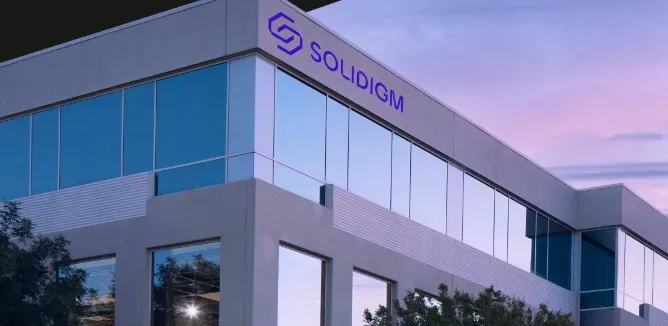
Solidigm, the U.S.‑based storage subsidiary of SK Hynix, is preparing for a U.S. IPO. Market estimates peg its maximum potential valuation at $150 billion, with planned fundraising of approximately $15 billion.
A heavy‑weight contender has entered the capital bonanza for AI computing power.
Major market news has recently surfaced: Solidigm, the U.S.‑based storage subsidiary of SK Hynix, is gearing up for a U.S. IPO. Market estimates put its peak potential valuation at $150 billion, with planned fundraising of roughly $15 billion.
If successfully executed, this offering is poised to set a new record for IPO proceeds among U.S.‑domestic semiconductor firms. It will mark another milestone capital‑markets event in the global memory‑chip sector, following the explosive growth of High‑Bandwidth Memory (HBM).
Solidigm is not a household name for many. Headquartered in California, the firm traces its origins to Intel’s NAND flash and enterprise‑grade SSD business unit, which Intel sold for approximately $9 billion in 2020. SK Hynix subsequently acquired the division, spun it off, and operates it as an independent entity.
Unlike consumer‑grade USB flash drives and smartphone flash memory familiar to the public, Solidigm’s core business centers on high‑capacity enterprise storage for data centers and AI compute clusters, specializing in high‑performance SSDs and enterprise flash‑memory solutions.
Its client roster includes Dell, leading North‑American cloud providers, and red‑hot AI compute‑service provider CoreWeave. Deeply embedded in large‑model training and inference workflows, it handles massive‑volume data read‑write and caching demands for AI clusters, occupying the easily‑overlooked storage foundation within the AI compute stack.
The reports originate from Reuters and Bloomberg, citing people familiar with the matter: Solidigm has kicked off the investment‑bank bake‑off process, with top‑tier banks vying for underwriting mandates.
It is critical to note that the overall listing plan remains in early‑stage negotiations. The listing timeline, final offering size and valuation range have not been finalized and will shift dynamically with U.S.‑market liquidity conditions and sentiment toward the AI sector.
Neither Solidigm nor its parent SK Hynix has formally confirmed a listing timetable to date, and outcomes remain subject to change.
One easily‑confused point needs clarification:
In July this year, SK Hynix itself completed a secondary listing on the Nasdaq via ADRs, raising $26.5 billion and setting a fundraising record for non‑U.S. companies listing in the United States. By contrast, if Solidigm pulls off its IPO, the issuing entity will be this independently‑run U.S. semiconductor firm. These are two distinct projects and must not be conflated.
Its significance becomes clearer when measured against the historical track record of U.S. semiconductor IPOs.
Arm went public in 2023 at a valuation of around $54 billion. AI‑chip star Cerebras Systems achieved an IPO valuation of approximately $56 billion in 2026.
Against these benchmarks, Solidigm’s rumored peak valuation of $150 billion vastly outstrips these highly‑sought‑after chip companies from recent years.
The market’s willingness to assign such a steep premium to a memory firm rests on a clear underlying logic: AI competition is never solely a GPU arms race. Memory acts both as a computing‑power bottleneck and the foundational bedrock for compute capacity.
During iterative advancement of large models, training datasets, vector databases and real‑time inference all require continuous ingestion and output of enormous volumes of data.
No matter how powerful GPU compute may be, without high‑speed, high‑capacity storage to pair with it, compute resources sit idle while “waiting for data”.
HBM and enterprise‑grade SSDs have moved beyond their traditional identity as memory components, evolving into indispensable mission‑critical hardware for AI infrastructure.
Capital betting on Solidigm is, at its core, not a bet on a cyclical rebound for conventional flash memory, but a wager on the long‑term expansion of global AI capital expenditure.
Solidigm’s lofty projected valuation represents a structural premium generated by the AI‑compute cycle, rather than a broad‑based uplift across the whole semiconductor industry.
Market momentum is heavily concentrated in high‑end storage products tied to data centers and AI clusters. Traditional consumer‑oriented flash‑memory for phones and PCs can hardly command comparable valuation multiples. Should global cloud and AI firms slow their compute‑capital‑spending growth, mega‑size IPOs of this scale will bear the brunt of fading market liquidity first.
The semiconductor sector’s inherent heavy cyclicality hangs like a sword of Damocles over all memory players.
Historically, NAND flash prices have repeatedly swung between dramatic surges and collapses. Industry overcapacity can rapidly compress corporate profits.
Yet Solidigm’s growth narrative is fully decoupled from old‑cycle flash‑memory dynamics driven by consumer demand from phones and PCs. Its performance anchor lies in ongoing compute‑procurement budgets from cloud vendors and AI startups.
For all its glowing prospects, material risks persist.
First, today’s high valuation is built on bullish AI‑demand assumptions with very little margin for error. Should major tech firms slash compute‑procurement orders, corporate revenue and profit margins will come under immediate pressure.
Second, NAND‑flash production capacity is highly elastic. Heavyweights including Samsung and Micron keep expanding high‑end‑memory output; future supply gluts will directly squeeze profit margins.
Third, a multi‑billion‑dollar mega‑IPO places heavy demands on the U.S. equity market’s capacity to absorb new issuances. When tech‑sector sentiment sours rapidly, large offerings can suffer weak investor demand and downward‑revised offer prices.
Even as capital markets price a memory company at sky‑high levels, industry talent demands are quietly reshaping amid the AI‑compute wave.
Semiconductors were once synonymous with CPU and GPU chip design. Amid today’s AI‑cluster build‑out boom, demand keeps rising for roles covering memory chips, firmware development, high‑speed interfaces, SSD system validation and cluster‑storage architecture.
Semiconductors are no longer the exclusive domain of microelectronics majors. Talent from computer science, electrical engineering and materials engineering can all find their place within the compute‑hardware value chain.
The AI wave has reordered semiconductor value hierarchies. Memory was once a supporting afterthought and pure cost item for compute workloads. Today storage directly caps the throughput ceiling of entire AI clusters and has become a critical variable governing compute performance.
The multi‑hundred‑billion‑dollar valuation assigned by capital markets fundamentally reflects market conviction that “storage bottlenecks” will persist long‑term and premium enterprise‑grade memory will sustain steady valuation upside.
Still, cycles do not disappear. Investor enthusiasm arrives fast and fades equally quickly. Memory‑price cycles, competitive dynamics among global incumbents, and risks of AI adoption falling short of forecasts could rewrite Solidigm’s listing story at any time.
Parallel to this capital‑market frenzy lies continuous evolution in industry‑talent dynamics.
Long‑term build‑out of compute infrastructure will keep generating abundant hardware‑focused job openings.
Many STEM international students default to fixating on large‑model algorithm and machine‑learning roles, where competition grows increasingly cut‑throat. Meanwhile, foundational tracks such as memory‑system engineering, firmware development, IC verification and hardware systems maintain steady talent shortages. Multiple North‑American chip and compute firms keep ramping‑up hiring for relevant engineering positions.
### Career Takeaways for STEM International Students
Solidigm’s potential mega‑U.S.‑IPO sends a tangible industry signal for international students majoring in EE, CS, microelectronics, materials science and related fields:
The ultimate AI‑compute competition plays out at the hardware layer, and talent demand within chips and high‑end memory tracks continues to expand.
For overseas job hunting, avoid fixating exclusively on hyped algorithm roles. Tracks including firmware development, storage architecture, high‑speed hardware and chip verification face relatively less competition and are worthy of your strategic focus.
Students targeting U.S. roles should familiarize themselves early with North‑American semiconductor new‑grad hiring timelines, build solid understanding of OPT and H1‑B visa rules, and proactively accumulate hardware‑related project and internship experience.
The semiconductor industry goes through booms and busts; capital sentiment ebbs and flows. Even so, engineers capable of solving real‑world foundational‑hardware problems will remain scarce over the long run.
By understanding the sector logic behind capital‑market favoritism and building in‑demand hard skills ahead of time, you will be well‑positioned to seize high‑quality career opportunities when industry tailwinds arrive.