
 MentorX
 1
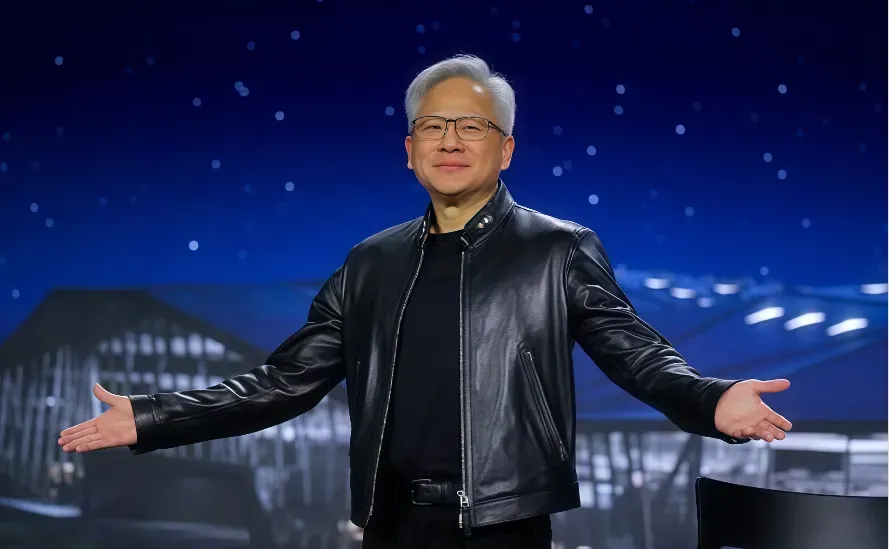
At around 9 a.m. Eastern Time on November 23, Nvidia issued an announcement running under 600 words: effective immediately, Jensen Huang is reinstated as President, Chief Executive Officer and member of the Board of Directors.
At 9:54 p.m. Eastern Time on November 22, Trump posted on Truth Social: "I want Nvidia's board to rehire Jensen Huang. It would be the best thing for the company and the best thing for America."
At around 9 a.m. ET on November 23, Nvidia issued an announcement running under 600 words: effective immediately, Jensen Huang is reinstated as President, Chief Executive Officer and member of the Board of Directors.
Exactly 11 days since he stepped down from those three roles on November 12.
Six days earlier, the company's chairman had said on the earnings call that the board had no intention of restoring his position.
01 After Reinstatement, Shares Surged 36% and Market Cap Returned to $4.02 Trillion
The market moved first.
After the announcement, the stock rose more than 27% in premarket trading at one point; after the U.S. open, gains quickly widened past 30%.
At 10:26 a.m. ET, the stock stood at $171.50, up 36% from the previous close of $125.53. Market cap climbed back above $4 trillion — an increase of roughly $900 billion in a single day.
This was not about one stock.
The Dow rose 2.48%, the S&P 500 4.27%, the Nasdaq 6.05%, and the Philadelphia Semiconductor Index nearly 13%. AMD gained 6.7%, SanDisk 18%, Lumentum 19%, Coherent 18%.
Ken Mahoney, president of Mahoney Asset Management, put it bluntly: Huang is back, and now the question is how much short sellers will have to buy to cover.
02 The Reinstatement Was Driven by Market and Political Pressure Alike
Rewind to November 11.
The board accepted Huang's resignation as president, CEO and director, disclosed it the following day, named CFO Colette Kress interim CEO, installed veteran director Harvey Jones as the company's first chairman, and launched a search for a permanent CEO that would consider both internal and external candidates.
On the November 17 earnings call, Jones laid out the reasoning plainly: after disclosure of personal conduct that did not align with the company's code of conduct, standards and culture, Huang resigned voluntarily and the board unanimously accepted it. He added that the board had no intention of restoring him as CEO.
That same day, Huang issued his first public statement since leaving. He said he deeply regretted the problems he had caused the board, pledged to cooperate with the independent investigation, and said he would be honored to serve as CEO again if the board concluded that his return served everyone's interests. He was the first to say the words "I want to come back."
Then came the voices from outside.
On November 15, U.S. Treasury Secretary Bessent, appearing on a Fox program, called the management shake-up a dramatic shock, argued that the company should look outside for a leader, and set a ten-day deadline for a response.
On November 20, Trump told a White House press conference that Huang was "brilliant" and that America is a country of second chances.
On November 22, Bessent changed his tune on CBS's "Face the Nation": "Jensen is on the outside now."
That night into the early hours of the next day, Trump named Nvidia's board in writing on Truth Social for the first time: he wanted the board to rehire Huang — the best thing for the company, and the best thing for America.
A dozen or so hours later, the board voted.
03 The Announcement Acknowledged Input from Senior Government Officials and Concluded There Was No National Security Risk
That announcement deserves to be read word for word, because it is no ordinary personnel notice.
First: after a series of discussions and meetings with Huang, the board expressed satisfaction with his candor and leadership, and voted unanimously to restore his positions. Set the word "unanimous" next to "no intention of restoring" from six days earlier, and it is clear that what changed was not one person's mind but the entire board's.
Second: in reaching its decision, the board consulted senior U.S. government officials and was satisfied that Huang's reinstatement would not pose a national security risk. For a company worth $4 trillion to write "consulted senior government officials" in a personnel announcement is itself the news.
Third: the committee of independent directors will continue its investigation through to conclusion; Huang supports it and has pledged to cooperate. In other words, the man is back, but the matter is not closed.
Trump posted again that day: the board had made the right and proper decision; America needs Huang's leadership at Nvidia; the government has no reason to believe his return would create a national security risk; and the Attorney General has confirmed there is no evidence he was involved in any illegal conduct.
04 The Reinstatement Came with Three Conditions: the Investigation Continues, a National Security and Export Control Committee Is Created, and a Chief Compliance Officer Is Added
The second half of the announcement set out three new arrangements, easily overlooked behind the share-price gain.
One: the investigative committee of independent directors continues to operate, and has retained independent legal counsel.
Two: a newly created "National Security and Export Control Committee," also composed entirely of independent directors, is recruiting legal counsel with national security experience — counsel who will in turn assemble a specialized advisory team.
Three: a newly created Chief Compliance Officer will oversee compliance across the entire company and report to the Nominating and Corporate Governance Committee.
Looking further out, the December 1 congressional inquiry and the progress of the SEC review have yet to play out.
Read these together and the conclusion is clear: he is back, and three constraints take effect at the same time. Reinstatement is not expungement but a conditional return — the investigation proceeds as before, compliance is upgraded, and export controls get a dedicated committee watching them.
05 Industry Impact: The Product Cycle Waits for No One; Compliance and Export Controls Turn Procedural
Why did the board overturn a position it had taken six days earlier?
Well-known tech analyst Dan Ives gave the answer in a research note to Yicai: the alternative posed greater risk to shareholders.
At the start of the Rubin chip cycle, the cost of leaving a founderless Nvidia searching for a CEO was simply too high.
He called the reinstatement a "paired governance structure": the founder back in the driver's seat, an independent committee in the passenger seat.
The shipping cycle forced the issue.
The next-generation Rubin platform is entering its shipping cycle. Changing leaders at that moment would force customers and the supply chain to realign, and no one wanted to pay that cost.
The ecosystem reacted more directly.
Ryuta Makino, an analyst at Gabelli Funds, saw it as positive for the ecosystem as a whole, with direct beneficiaries being neoclouds and their spin-off businesses, along with companies tied to the AI server chain such as Dell, Lenovo and TSMC.
Two things will not disappear just because the man is back.
First, export controls and compliance are shifting from "the CEO's personal judgment" to "a committee plus a compliance officer process." Near-term friction may ease; long-term rules will only get more granular.
Second, the governance discount. Ives maintained a $225 price target and cautioned that the gap between $225 and $300 reflects value that only materializes once governance concerns are fully cleared — not something a single reinstatement can deliver.
06 Jobs for International Students: Compliance Hiring Expands, Screening for Core Technical Roles Tightens
For Chinese students studying computer science, electrical engineering, materials and data-related fields, the real impact of this episode shows up in job requisitions and role descriptions.
First, the additions.
The new bodies attached to the reinstatement are not window dressing: the National Security and Export Control Committee, the Chief Compliance Officer and the outside legal advisory team all mean headcount.
Over the past few years, compliance, legal, government affairs and export-control screening teams at semiconductor companies have expanded continuously; this crisis forced another round of growth.
For international students, these roles demand a less narrow background than chip design — law, public policy, international relations and supply chain management all fit — making this a comparatively under-discussed career path.
Then, the existing base.
With management turmoil over, hiring slots will unfreeze, but the mix will change.
What stays genuinely stable are the product lines that directly support revenue: data center systems, networking and interconnect, cluster operations, inference deployment, software stacks, and "picks and shovels" engineering roles in power delivery and thermal management.
The first to be cut are the nicely named project teams far from revenue.
Then there is screening.
For classified programs, advanced-node work and China-related business, background checks on non-U.S. candidates have always been stricter, and some roles require citizenship or a green card outright.
Once the Chief Compliance Officer system is in place, internal compliance screening will only get more granular, never looser. That line has nothing to do with who the CEO is.
So the judgment comes down to concrete moves:
Do not lock your sights on a single company;
spread your resume across the long compute-infrastructure chain;
prioritize internships in teams that touch real delivery;
plan your visa status early — OPT extensions, H-1B, O-1 and Big Tech sponsorship policies change every year, so go by official and company legal guidance.
One more point deserves stating plainly: this round of AI hiring expansion rests on capital expenditure, not unlimited demand.
In 11 days the stock lost nearly half its value and then jumped 30% overnight, and the first place that volatility reaches is new-graduate and intern offers: treating "getting into Big Tech" as the only answer is itself a risk exposure.