 MentorX
 0
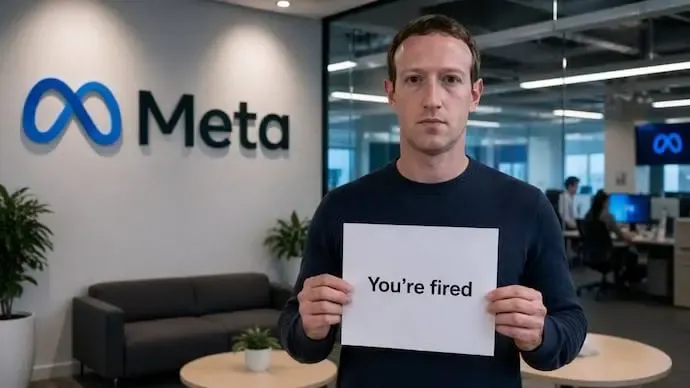
In June this year, Meta recruited several core team members from AI safety startup Virtue AI. Yet roughly 120 days later, the partnership came to an end.
Poached by Meta, Gone Collectively Four Months Later: Landing at a Big Tech Firm Is No Guarantee of Job Security
Handpicked by Meta.
An entire team onboarded to join the race for AI’s most critical frontier.
This should have been a textbook rags-to-riches success story.
Yet they stayed at Meta for only four months.
In June this year, Meta brought on several core members from AI safety startup Virtue AI. Back then, Meta was locked in a fierce global scramble for AI talent. While countless applicants submitted hundreds of applications chasing a single Big Tech offer, this group joined the Superintelligence division with their team intact.
Roughly 120 days later, however, the partnership fell apart.
It was not a verdict on their technical skill, nor did it signal that Meta was abandoning AI safety. When pressed by the public, Meta gave only one brief explanation: misalignment in working styles.
On the surface, it sounds like a mild remark. In North American workplaces, it can be one of the harshest reasons for a separation.
After all, these people boasted stellar academic credentials, founded an AI startup, and had worked on projects at organizations including Anthropic and OpenAI.
01 Why Did the Star Team Recruited by Meta Exit After Just Four Months?
Virtue AI is a startup focused on AI safety.
In June, multiple team members joined Meta to work on AI safety and superintelligence initiatives. At the time, Meta was aggressively competing for AI talent worldwide, and the hire was widely seen as a key move to strengthen its AI safety capabilities.
By October, the collaboration was over.
The full details of what transpired remain unknown to outsiders. One point stands out, though: these founders had built an AI startup, delivered cutting-edge research, and passed Meta’s rigorous hiring bar. Technical competence was clearly not the root cause.
The friction likely emerged once they were inside the organization. Startups and large tech giants operate by fundamentally different playbooks.
At a startup, a small group can align on a direction after a quick meeting and pivot the same day when issues surface. At a company like Meta, a single project often requires cross-team alignment, layered reporting chains, resource negotiation and extensive review workflows.
Work patterns that drive high efficiency in one environment may break down in another.
02 Strong Technical Skills Are No Match for Poor Culture Fit
Culture Fit is a phrase frequently brought up in North American interviews.
Many candidates reduce it to “being friendly” or “easy to get along with”, or even dismiss it as a vague excuse hiring teams use to reject applicants. In reality, it assesses whether you can reliably deliver results within the existing organization.
First, communication style.
Companies care not only whether you can design solid technical solutions. They also watch whether you can articulate your reasoning clearly, share progress proactively, and guide the group toward consensus when disagreements arise.
In large organizations, few projects are completed solo. Even the most elegant solution will struggle to launch without buy-in from partner teams.
Second, work rhythm.
Some teams prioritize rapid iteration and experimentation; others emphasize formal processes and risk mitigation. Some managers expect employees to make autonomous decisions, while others require frequent check-ins. No single style is inherently superior. What matters is whether both sides are compatible.
Third, role expectations.
Many job seekers fixate only on the company, job title and compensation package. They fail to clarify: what problems am I actually hired to solve? How much decision-making authority comes with this role? What metrics will my manager use to evaluate me after my first three months? If expectations do not match, even top talent will run into constant friction.
03 The Real Evaluation Starts After You Accept the Offer
For international students, the most practical lesson from this story is that interviews are never a one-sided screening process. You prove your value to the company, and the company should paint an honest picture of its working environment for you.
During interviews, alongside grinding algorithm questions and behavioral questions, you can turn the questions back toward the team:
How does this team typically make decisions? Why is this role open? What deliverables are expected from new hires in the first three months? Which teams will I collaborate with regularly? How does my manager measure success?
These questions may seem less tangible than salary and benefits, but they help you gauge whether the role is truly a good fit.
The first 90 days after accepting an offer are equally critical.
Resist the urge to prove that your old ways of working are superior. Start by understanding the team’s goals, communication norms and decision-making processes. Share progress early, surface risks proactively, and build trust before pushing for changes. Candidates with outstanding resumes often fall into the trap of believing raw ability can overcome everything. In the real workplace, individual expertise only translates to outcomes when the organization accepts your approach and teammates collaborate with you.
The full story behind the rapid split between Virtue AI members and Meta may never become public. Still, it delivers a clear warning for all job seekers:
Joining a Big Tech firm is not the finish line of your career — it marks the start of a new round of evaluation.
Your resume and technical expertise get you the offer. Consistent delivery, communication and adaptability are what keep you there.