
 MentorX
 0
0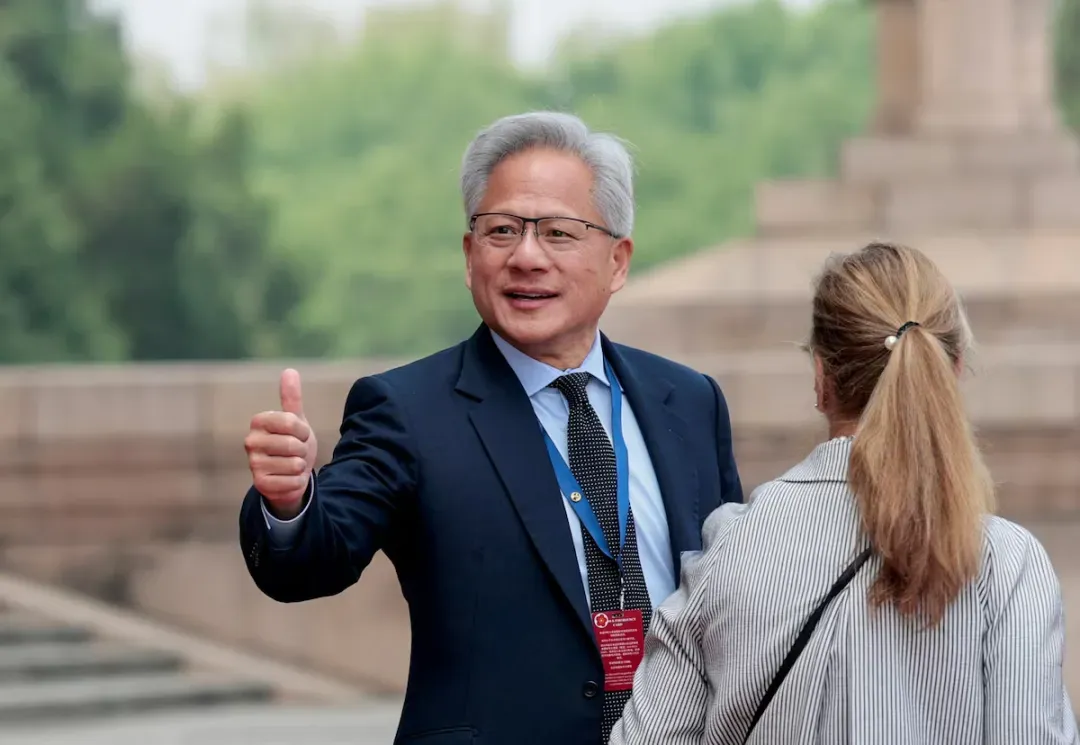
On September 29, the School of Economics and Management at Tsinghua University released the list of new members joining its 2026 Advisory Board. The two most high-profile appointees are Jensen Huang, Founder and CEO of NVIDIA, and Lisa Su, Chair and CEO of AMD. In addition, Pictet-Marc Pictet, Senior Managing Partner of the Pictet Group in Switzerland, has also been named a new board member.
Who would have thought
NVIDIA CEO Jensen Huang
has recently taken on a new role at Tsinghua University!
On September 29, the School of Economics and Management at Tsinghua University released the list of new members joining its 2026 Advisory Board. The two most high-profile appointees are Jensen Huang, Founder and CEO of NVIDIA, and Lisa Su, Chair and CEO of AMD. In addition, Marc Pictet, Senior Managing Partner of the Pictet Group in Switzerland, has also been named a new board member.
It should be noted that this is not a full-time faculty appointment as a professor. Instead, they join the school’s Advisory Board to provide counsel on strategic development, teaching, research and international exchanges.
What makes this noteworthy is that NVIDIA and AMD, the two tech giants locked in direct competition in the global AI chip market, will have their leaders listed together as newly appointed advisors at Tsinghua.
For international students currently studying CS, EE or ECE in the United States, or those planning to enter the AI industry, this story merits careful attention.
01 Why Are The Two Chip Giants Joining Tsinghua Simultaneously?
NVIDIA and AMD are two indispensable names in the AI industry.
Leveraging its GPUs, CUDA ecosystem and AI computing platforms, NVIDIA has built a formidable competitive edge in large-model training and inference. AMD continues to advance data-center GPUs, AI accelerator chips and associated software ecosystems.
The two are commercial rivals, yet both need to maintain ties with top universities for talent development, technical research and global industry exchanges.
Jensen Huang’s connections with Chinese universities did not start this year.
As early as 2007, he visited Tsinghua to discuss GPU technology development. In 2024, he appeared at the Hong Kong University of Science and Technology, where he received an honorary doctorate in engineering and shared his outlook on the future of AI and robotics.
In the past, when people mentioned NVIDIA, graphics cards and gaming were often the first things that came to mind. Today, GPUs have become one of the most critical pieces of infrastructure for the AI industry.
The simultaneous appointment of executives from these two chip giants to Tsinghua’s Advisory Board has once again brought talent and educational collaboration within the global AI sector into the spotlight.
02 AI Talent Competition Is Reshaping the North American Job Market
For international students in North America, more important than the news itself is understanding the new technical demands being created by the AI industry.
Over recent years, SWE, Data Analyst and Data Scientist roles have remained popular job choices for international graduates. As large language models move into industrial deployment, however, employers are seeking more specialized types of talent.
Tech firms including NVIDIA, AMD, Microsoft, Amazon and Google are building capabilities around AI infrastructure, machine learning systems, cloud computing and model applications alongside traditional software development roles.
Several high-potential tracks to watch:
👉🏻AI Infrastructure / ML Systems: GPU computing, distributed training, model inference, cloud infrastructure.
👉🏻AI Engineer / Applied AI: LLM application development, AI agents, RAG and enterprise AI products.
👉🏻GPU / Hardware Engineering: CUDA, parallel computing, chip architecture and performance optimization.
👉🏻Robotics / Embodied AI: Robot perception, autonomous driving, computer vision and hardware-software co-design.
That said, the diversification of AI roles does not mean all related companies are hiring at scale. Some of these positions demand deeper technical expertise and hands-on engineering experience than classic SWE jobs.
Jensen Huang and Lisa Su joining Tsinghua’s Advisory Board does **not** signal upcoming major recruitment campaigns by either firm in China, nor can it be interpreted as a coming hiring boom for AI jobs in North America.
Still, from AI chips and large models to robotics and smart manufacturing, industry demand for interdisciplinary technical talent keeps evolving. For international students hoping to build careers in North America, the key question is no longer simply whether they can land a job at a big tech company — but whether their skill set can align with industry shifts in the years ahead.
The AI era does not belong exclusively to AI majors. Students with backgrounds in CS, EE, ECE, Data Science and other engineering disciplines can all carve out opportunities amid this technological transformation.