
 MentorX
 96
96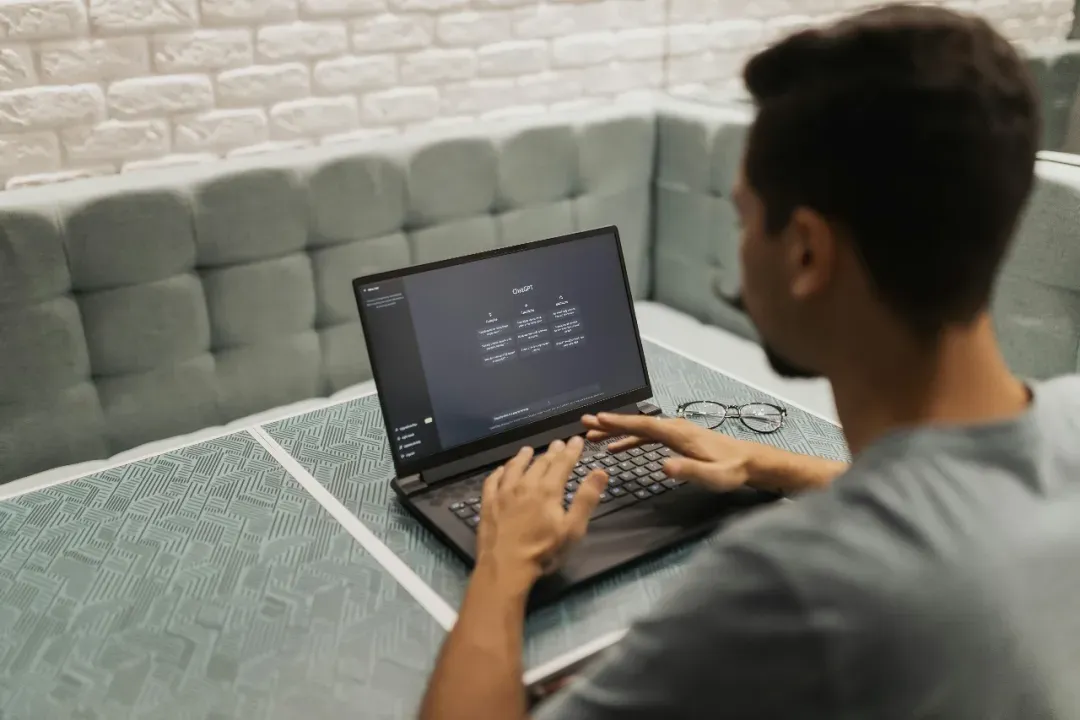
Entering 2026, there has been a notable paradigm shift in the coding interviews at top North American tech companies (FAANG/MAMAA). While LeetCode remains the entry ticket, interviewers have shifted their focus from "whether you can solve the problem" to "how you collaborate with AI and systems to deliver the optimal solution."
Entering 2026, there has been a notable paradigm shift in the coding interviews at top North American tech companies (FAANG/MAMAA). While LeetCode remains the entry ticket, interviewers have shifted their focus from “whether you can solve the problem” to “how you collaborate with AI and systems to deliver the optimal solution.”
Core Changes & Trends
From Problem Memorizers to Debuggers (The Shift to Debugging & Maintenance)
As AI can breeze through most original LeetCode problems, major tech firms have realized that the marginal value of testing pure algorithm skills in whiteboard coding is declining.
✅ More Debugging Rounds: Companies such as Meta and Microsoft now tend to give candidates existing buggy code — issues may include multithread race conditions, incorrect edge cases or performance bottlenecks — and ask you to locate and fix bugs within a time limit.
✅ Evaluation Focus: What matters is no longer how many algorithms you have memorized, but your ability to read, understand and analyze other people’s code.
AI-Inclusive Interviews
In 2026, some teams (LinkedIn and certain Google groups, for example) have started piloting interviews where candidates may even be required to use AI tools such as GitHub Copilot or internal AI assistants to complete tasks.
✅ Harder Problem Sets: With AI assistance available, interview questions are no longer simple problems like implementing an LRU Cache; instead, they feature more complex scenario simulations.
✅ Evaluation Criteria: Interviewers assess your prompting skills — can you translate requirements into precise instructions understandable by AI? Can you instantly spot hidden vulnerabilities in AI-generated code?
Narrow & Deep System Design
The traditional exercise of “design YouTube” with high-level architecture diagrams has become outdated. Modern interviews favor deep dives:
✅ Incident Analysis: Interviewers may share a real production post-mortem report and ask: “If this were your incident, what architectural changes would you make to prevent this cascading failure?”
✅ Rigorous Tradeoff Analysis: You will not merely draw Kafka and Redis boxes. You need to elaborate in detail why eventual consistency is chosen over strong consistency under specific traffic peaks.
Higher Bar for Soft Skills (Behavioral Standard)
The North American job market (especially 2024–2026) is transitioning from a seller’s market to a buyer’s market. Headcount at big tech is extremely limited, so standards for culture fit have become stringent:
✅ Scope of Impact: For L5+ roles, interviewers dig deep into how you drove cross-team collaboration and resolved technical disagreements within teams.
✅ Ownership: Answers like “I only completed tasks on the Jira ticket” are risky. Interviewers want stories about how you proactively identified system risks and pushed solutions to delivery.
2026 Interview Preparation Guide
LeetCode Strategy
Coding interviews in 2026 are no longer a race between humans and algorithms. They are a contest where human-AI teams tackle complex business logic. You still need to practice algorithm problems — and the bar is higher than ever.
If you compare the 2026 coding interview to a car race, AI (Copilot) is your race car, and the algorithm fundamentals built through practice are your engine and driving intuition. You cannot win without the race car. But if you do not understand engine mechanics or lack driving instinct (your license), you will not even make it onto the track.
AI is your co-pilot; you are the captain.
Interviewers frequently ask: “Why will this AI-proposed solution crash when handling billions of data points?”
Without algorithm practice and knowledge of time complexity, you cannot tell the AI’s solution is a ticking time bomb.
2026 Interview Logic: AI writes code; you audit code.** Without solid algorithm foundations, you are not qualified to review AI outputs.
Questions have evolved: from fill-in-the-blank exercises to reading comprehension + essay writing.
With AI assistance available, interviewers no longer test basic Binary Search (AI can produce the code instantly).
✅ Modern questions: Heavy contextual background mixed with business logic.
✅ The point of practicing problems: Not to memorize code, but to build modeling skills. Only with sufficient practice can you parse a long, complex problem statement and recognize that the core is essentially a weighted shortest-path problem.
Pure Whiteboard Rounds Remain
While many interview rounds embrace AI, to filter out hollow candidates who rely entirely on tools, many large tech companies (Google and some unicorn startups included) still retain 1–2 pure whiteboard rounds where AI tools are strictly forbidden.
✅ This round verifies: can you still drive without driver assistance?
✅ If you get stuck here, stellar performance in later AI-collaboration rounds will make interviewers suspect you relied on AI to pass.
💡 The Right Mindset for Algorithm Practice in 2026
If you practice, do not rote-learn solutions like before. Adjust your approach:
✅ Code aloud and explain your reasoning: Practice think-aloud problem-solving while coding. Interviewers now prioritize your logical derivation process.
✅ Prioritize code quality: Previously, passing test cases was enough. Now industrial-grade standards matter. Variable naming, error handling and edge case checks earn you extra points in 2026.
✅ Shift from quantity to deep understanding: Rather than blindly solving 1000 problems, master 300 classic problems (LRU, sorting, dynamic programming, graph theory). Be ready to explain: “Why this data structure? Is there a more memory-efficient alternative?”
Conclusion
Strong coding fundamentals are your foundation as an engineer.
The widespread adoption of AI frees engineers from repetitive grunt work, yet raises the bar for deep thinking. Algorithm practice remains necessary. The goal is to evolve from a code-copying implementer into a principle-driven architect.
Take a senior engineer with 10 years of experience for example. What he may lack is not the ability to write code, but the mindset to leverage deep foundational knowledge to direct AI toward solving new problems in the AI era.
If you want to seize opportunities during prime hiring windows but remain unsure about your preparation roadmap — resume polishing, interview readiness, improving on-site performance, or identifying suitable tracks — feel free to reach out. We can help you clarify your direction and build a customized strategy.