
 MentorX
 40
40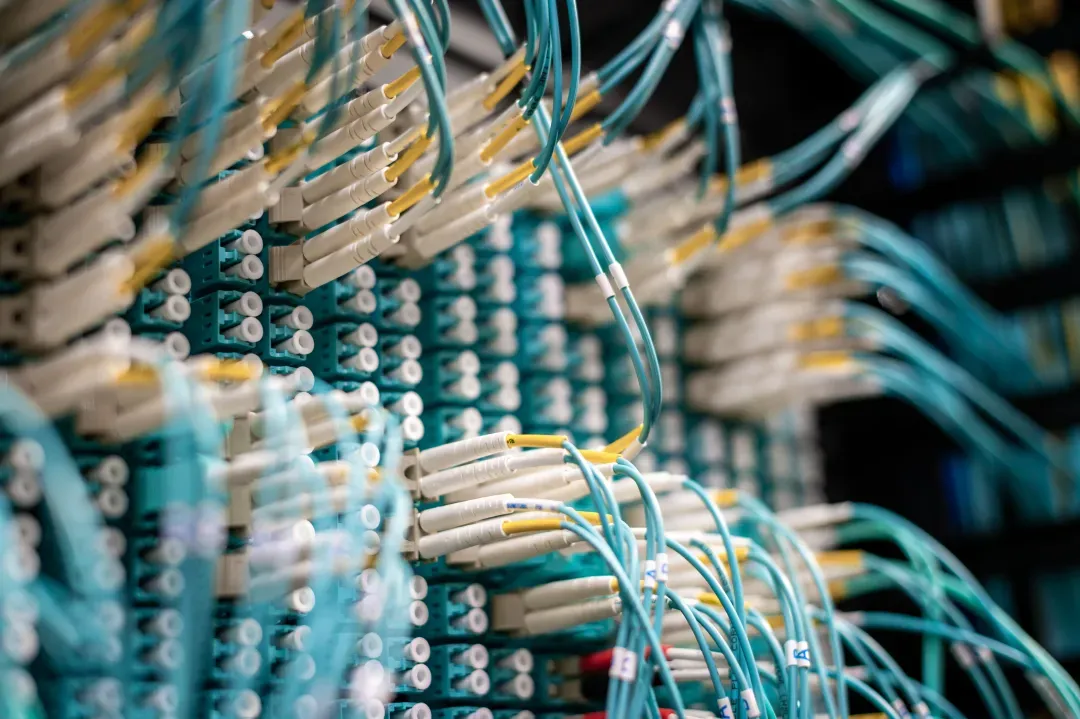
On September 15, programmable chip firm Altera announced that its parent company had confidentially submitted a draft S-1 registration statement to the U.S. Securities and Exchange Commission. At this stage, the number of shares to be offered, price range and listing timeline have not yet been determined. The IPO is subject to SEC review and market conditions.
Over the past two years, whenever we talk about AI and employment, a few questions inevitably come up: Will AI replace entry-level roles first? Can new grads still land jobs? Is it already too late to learn algorithms now?
On September 15, programmable chip firm Altera announced that its parent company had confidentially submitted a draft S-1 registration statement to the U.S. Securities and Exchange Commission. At this stage, the number of shares to be offered, price range and listing timeline have not yet been determined. The IPO is subject to SEC review and market conditions.
Reuters previously cited sources saying the IPO could raise more than $2 billion and could launch as early as 2026. Altera is currently 51% owned by Silver Lake and 49% owned by Intel. Its FPGAs and other programmable chips are deployed in data centers, communications, industrial equipment, AI, aerospace and other fields. The fundraising size and listing timeline remain media reports and have not been officially confirmed by the company.
The question is no longer simply “Should I switch to compete in algorithm roles?” but where EE majors can plug into the AI industrial chain.
01 AI Lives in the Cloud, Powered by a Full Suite of Electrical Systems
Every time a large model runs training or inference, countless chips, servers and network hardware are hard at work. Servers draw continuous power; high-density racks demand stronger cooling; high-speed data transfer is required between different compute nodes.
The conversation quickly extends beyond algorithms to the physical world: Can chips deliver sufficient compute power? Can power distribution systems handle rising loads? Can control systems detect temperature, electrical and hardware anomalies in a timely manner? Can backup power kick in fast during outages?
These are classic EE problems.
In its 2026 Global Data Center Outlook, JLL estimates that AI training workloads can reach 10 times the power density of traditional computing tasks. The U.S. Bureau of Labor Statistics projects 9.8% job growth in the U.S. utility sector from 2025 to 2035, driven partly by rising AI power demand. The computing infrastructure, data processing and hosting services sector is expected to grow by 25.1%, adding roughly 120,400 jobs.
Models can be demonstrated on screens, but stable real-world deployment relies on fully functional chips, power delivery, networks and control systems. None can fail.
02 What EE Roles Exist Inside an AI Data Center?
Chips & Hardware
FPGAs can be reconfigured for specific use cases and are widely used in communications, industrial control and data centers. Relevant roles include FPGA Engineer, ASIC Design Engineer, Verification Engineer, Hardware Engineer, Embedded Systems Engineer and Firmware Engineer.
Students with coursework in Digital Logic, VLSI, Computer Architecture, Verilog or Embedded Systems may target semiconductor firms, server OEMs, network hardware vendors and EDA companies.
Power & Power Distribution
AI data centers are massive energy consumers. As server counts rise and rack power densities climb, substations, distribution networks, UPS, energy storage and protection systems all require upgrades.
Roles such as Electrical Engineer, Power Systems Engineer, Power Distribution Engineer and Protection and Controls Engineer draw on knowledge from Power Systems, Power Electronics, Load Flow and Control Systems courses.
Job seekers do not need to limit themselves to big tech firms. Power utilities, electrical equipment manufacturers, engineering consultancies, energy companies and data center developers all recruit for these skill sets.
Communications, Controls & Operations
AI training requires massive clusters of compute nodes working in tandem. Larger models impose stricter requirements on data throughput, network latency and system reliability. Students focusing on communications, photonics, RF or Signal Processing can look into Data Center Network Engineer, Optical Engineer and Network Hardware Engineer openings.
Data centers require round-the-clock monitoring of power, temperature, humidity and equipment health, creating demand for Controls Engineer, SCADA Engineer, Automation Engineer and Reliability Engineer positions.
Before full commissioning, every data center undergoes testing of power, cooling, control and backup subsystems. Commissioning Engineer, Critical Facilities Engineer and Data Center Electrical Engineer are viable tracks for EE students to explore.
Specialized staffing firm The Planet Group reported that its data center-related job orders rose 80% year-over-year in the first half of 2026. This figure only reflects orders handled by the firm and is not representative of nationwide market growth, yet it signals hiring demand across construction, networking, engineering and operations.
03 EE Students Do Not All Need to Switch to Coding — But Pick the Right Niche
Growth in AI infrastructure does not guarantee EE graduates an easier job search than CS graduates, nor is switching to coding a bad choice. It simply opens new entry points for students already focused on chips, power, communications and controls.
This also does not signal a broad rebound across the U.S. hiring market. Opportunities cluster around roles with clear technical barriers directly tied to infrastructure buildout. Specialization and hands-on project experience remain key to matching job requirements.
- For chip and hardware tracks: Search keywords including FPGA, ASIC, RTL, Verification, Embedded, Firmware
- For power tracks: Search Power Systems, Substation, Protection and Controls, Critical Power, UPS
- For communications and networking tracks: Search Data Center Network, Optical, Fiber, High-Speed Interconnect
- For controls and automation tracks: Search SCADA, BMS, Automation, Critical Facilities
A strong industrial pipeline does not mean every opening is available to international students. Some semiconductor, communications and aerospace roles require U.S. Person status, U.S. citizenship or security clearance. Employers also vary widely in their policies toward OPT, STEM OPT and visa sponsorship.
When reading job descriptions, look beyond job titles and verify technical requirements, location, experience expectations and work authorization rules.
04 What Can EE International Students Do Right Now?
First, expand your search beyond “AI Engineer.” Add AI Infrastructure, Data Center, Power Systems, Semiconductor, FPGA, Commissioning and Critical Facilities to your keyword list; you will uncover a completely different set of employers and openings.
Second, avoid turning your resume into a course transcript. Generic lines such as “Completed simulations using MATLAB” or “Finished an FPGA course project” carry little weight. Project descriptions should state the problem solved, your individual responsibilities, testing and debugging steps, and measurable improvements in performance, power consumption or stability.
You do not need to master every tool. Chip-focused candidates can deepen Verilog, SystemVerilog, Cadence and Synopsys. Power engineers can learn ETAP, PSCAD and PSS/E. Controls candidates may prioritize PLC, SCADA and LabVIEW. Identify your target roles first, then build a skill stack recognized by hiring teams.
Lastly, build a targeted company list instead of only tracking big tech. Include chip designers, server and network hardware makers, data center operators, power utilities, equipment suppliers and engineering consultancies. Track each firm’s open roles, locations, experience prerequisites, hiring timelines and sponsorship policies.
The goal is not to build an endless spreadsheet, but to pinpoint which types of companies value your academic and project background.
05 EE Covers Many Subfields — Guidance from Industry Insiders Matters
Chip design, FPGA, embedded systems, firmware, communications, RF, signal processing, power systems and autonomous vehicles all fall under EE/ECE, yet they diverge sharply in required coursework, projects, target employers and interview preparation.
Many students complete numerous projects but struggle to identify their best-fit career paths. When they see opportunities in AI data centers, they oscillate between chips, power, communications and controls. Without a clear direction, course selection, project work and applications become fragmented and fail to build a coherent profile.
Vine Education delivers specialized career planning for EE students, largely because its founder, Dr. Ma, is an EE subject-matter expert.
Dr. Ma earned his undergraduate degree from Tsinghua University and a PhD in Electrical Engineering from the University of Washington. He has worked as a scientist at Siemens, an executive at a publicly traded Silicon Valley company, and served as a doctoral advisor. He understands the technical requirements across EE subfields and what hiring managers look for in project portfolios.
Vine Education’s EE coaching spans semiconductors and chip design, embedded and firmware engineering, communications and signal processing, power systems and renewable energy, automotive electronics, and cross-cutting hardware-software tracks. We help students map job-search strategies, align projects with job requirements, and identify skill gaps based on their coursework, research background and immigration status.
If you are pursuing an EE or ECE degree in the U.S. and are unsure whether to pursue chips, power, communications, controls or AI infrastructure, you can talk with Vine Education.
Identifying your niche first, then planning projects, internships and applications, is more practical than simply chasing the buzzword “AI.”