
 MentorX
 1
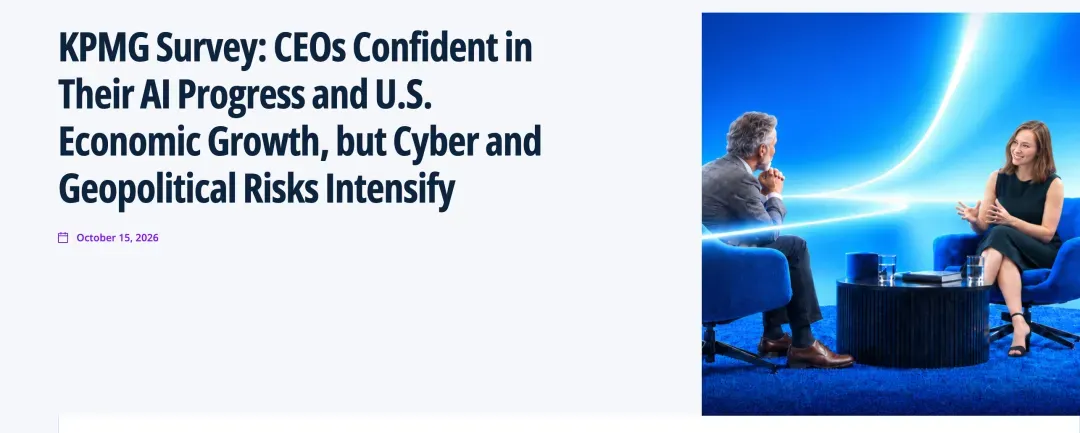
KPMG’s newly released *2026 US CEO Outlook* highlights a notable figure: 89% of surveyed US CEOs expect their companies to grow headcount over the next three years.
Will U.S. Companies Keep Hiring in the Future?
KPMG’s newly released *2026 US CEO Outlook* highlights a notable figure: 89% of surveyed U.S. CEOs expect their organizations to expand headcount over the next three years.
For international students submitting applications and waiting for interview callbacks, as well as parents concerned about their children’s post-graduation prospects, this number at least signals that the large enterprises surveyed still anticipate workforce growth.
Yet buried in the same survey is another statistic with more direct relevance to new graduates: 75% of participating CEOs said the integration of AI has prompted their firms to rethink the skill sets required for entry-level roles.
Only by pairing these two figures can job seekers grasp the true takeaway from the report: companies intend to hire more staff, while simultaneously redefining who they recruit and what responsibilities new hires will take on.
01 Hiring Projections Do Not Equal Open Roles for Every Team
First, a note on the survey scope. KPMG’s U.S. sample consists of 400 CEOs from large corporations with annual revenue exceeding $500 million. The findings reflect leadership expectations for the future and should not be treated as currently available open headcount.
Moreover, projected headcount growth does not necessarily equate to aggressive mass hiring. 60% of surveyed CEOs forecast workforce expansion of less than 5% over the next three years. For students, this remains a far cry from a job market flooded with openings, where applications easily get responses.
Total company headcount also tells you nothing about hiring within individual business units. A firm may ramp up investment in new lines of business while cutting roles in other departments; it may prioritize hiring seasoned professionals or fill gaps via internal transfers.
This is a critical layer international students need to dig into when researching employers: what problems is the target team solving? What experience does the role demand? Does it welcome new graduates? Are work authorization requirements aligned with your situation?
A company’s growth trajectory is worth monitoring, but only apply when your profile matches the specific opening.
02 Why Hiring Forecasts Can Feel Disconnected From Your Job Hunt
An October campus recruitment survey published by NACE offers additional context: the offer rate among responding employers dropped from 49% in the prior survey cycle to 46%. The average turnaround time from an initial interview to receiving an offer or rejection letter lengthened from 27.3 days to 40.5 days.
This survey compares historical hiring cycles and is not real-time data for the ongoing fall recruitment season. Still, it underscores a key distinction: corporate projections for long-term staffing levels are separate from the screening timelines and competition students experience firsthand.
In short, news of planned headcount growth warrants exploring new opportunities, but it is no guarantee that “this year will be easier to land a job.”
For students, more actionable metrics sit within your own application pipeline: Are your resumes securing interviews? At which stage are you getting rejected? Have recruiters shared follow-up timelines? This feedback guides whether you should pivot your target roles, refine application materials, or sharpen interview readiness.
03 Entry-Level Roles Are Still Available — But Proof of Competency Is Changing
KPMG’s 75% statistic refers to employers re-evaluating skill requirements. It should not be misinterpreted to mean 75% of roles have raised their bars, nor that three-quarters of entry-level positions will be eliminated.
That said, independent research confirms shifting job requirements. A PwC analysis released this year examined roughly 2.4 million U.S. entry-level job postings. Entry roles most exposed to AI were around seven times more likely to list traditionally senior competencies such as leadership and critical judgment compared to roles with minimal AI exposure. This shows a correlation across job advertisements and does not prove AI directly caused the shift.
For applicants, the key takeaway: when applying for entry-level positions, it is no longer enough to list coursework. You need tangible evidence that you can make reasoned judgments, interpret outputs, and move projects forward.
Even an academic project can be framed with granular detail. How was your analysis objective defined? Where were the data limitations? Why did you select your methodology? What checks would you run if your results contradicted your hypothesis?
These questions do not require fabricated professional experience. They help recruiters see the reasoning behind your project work.
04 AI Literacy Is Not Enough — You Must Be Able to Validate and Explain Your Work
Listing “familiar with AI tools” on a resume is straightforward. Articulating how you deploy these tools and validate their outputs takes deliberate preparation.
In NACE’s spring survey this year, 28% of hiring managers reported prioritizing early-career candidates who can leverage AI on the job. Nearly 60% said their internship programs include projects built around AI tools and capabilities. The survey also emphasized the importance of critical thinking alongside responsible tool use.
Below are guiding questions you can use to rehearse your project narratives (these are not universal interview questions):
For a data project: Can you explain your data sources, validation steps, and limitations of your conclusions?
For a marketing project: Can you outline your target audience, the rationale behind your content strategy, and how you measure performance?
For a software project: Can you clarify which deliverables were AI-generated, and how you tested, debugged, and revised the outputs?
The value of your project comes from demonstrating your workflow. Do not invent efficiency gains you never measured, and avoid padding your resume with responsibilities you did not own just to match the job description.
05 Align Market Shifts With Your Job Search Strategy
For international students, this report is best used to refine your preparation framework. When researching employers, focus on growing business divisions and specific openings. When drafting resumes, map your experience directly to job responsibilities. When practicing interviews, prepare to explain your methods, decision-making, and outcomes.
These steps are interconnected. Without clear direction, you risk sending out dozens of generic, misaligned applications. Without structured reflection on your experience, your resume and interviews will fail to showcase your strengths.
Vinead’s support addresses these practical pain points: we help students clarify career directions and unpack their background based on their major and goals, identify skill gaps, and build resumes and interview readiness. Our focus is helping candidates understand what target roles demand and substantiate their fit with authentic experience — rather than simply boosting application volume.
For parents, beyond tracking how many resumes your child has sent, ask these questions: Is their job search focus sharpened? Can they walk through their projects coherently? Do they adjust their approach after recruiter feedback?
Planned corporate headcount growth is worth watching, and evolving expectations for entry-level hires call for early preparation. Translating your experience into credible, concrete, defensible proof of ability is something students can start working on immediately.