
 MentorX
 1
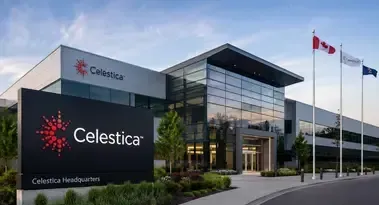
Why has a long‑established traditional electronics manufacturer suddenly landed at the center of the AI hardware boom? More importantly, what does this mean for international students job‑hunting in North America?
If the AI industry were a gold rush,
NVIDIA sells the most sought-after shovels,
OpenAI shows everyone where the gold lies,
and what Celestica does is more like:
building all the mine-site roads, power grids and machinery.
It does not manufacture GPUs, nor train foundation models. Its name rarely even makes the list of trendy AI companies. Yet this behind-the-scenes hardware firm posted quarterly revenue of $5.83 billion, an 83% year-over-year jump. It has set its 2027 revenue target at $40 billion, nearly double its 2026 figure.
After earnings came out, CLS shares surged roughly 16% in after-hours trading at one point.
Why has a long‑seen traditional electronics manufacturer suddenly landed at the center of the AI hardware boom? More importantly, what does this mean for international students hunting for jobs in North America?
01 AI Is Not Only Algorithm Roles — There Is an Entire Hardware Supply Chain
Over the past two years, most market attention has centered on GPU supply constraints and how much longer NVIDIA can keep growing. But once massive volumes of GPUs are deployed inside data centers, new bottlenecks emerge: how chips communicate at high speed, how servers form compute clusters, how data travels rapidly, and how the whole system runs reliably.
The larger the model, the more chips that must work in tandem, raising requirements for network bandwidth, switching gear and system integration. Competition in AI infrastructure is shifting away from individual chips toward complete compute systems.
This is exactly where CLS sits. It may not have the loudest brand profile, yet it fills an indispensable link in bringing AI compute online. When cloud providers ramp up capital spending, orders flow not only to chip vendors, but also to makers of switches, servers, optical communications gear, power and cooling systems, and hardware manufacturers.
Celestica’s growth sends a clear signal: North American AI hiring opportunities are not limited to foundation-model startups and GPU makers. They are spreading across the hardware ecosystem behind data centers.
If you only search for “AI Engineer” or “Machine Learning Engineer” during your job hunt, you will easily overlook a huge pool of roles tied to AI infrastructure.
02 Which Majors Should You Keep on Your Radar?
The first bucket covers computer science and electrical engineering.
Beyond algorithm roles, high-speed networking, distributed systems, cloud infrastructure, embedded systems, firmware development and hardware testing are all deeply tied to AI data centers. Networking and system roles do not train models, yet they determine whether compute resources can be used reliably.
The second bucket includes mechanical, electrical and manufacturing engineering.
Servers and data centers depend on solutions for power delivery, thermal management, equipment reliability and mass production. Mechanical Engineers, Electrical Engineers, Manufacturing Engineers, Quality Engineers and Reliability Engineers all contribute to AI hardware deployment.
The third bucket is supply chain and operations.
Hardware projects involve chips, components, factories, logistics and customer delivery — far more complex workflows than pure software products.
Supply chain analysis, procurement, project management, production planning and customer operations are therefore critical. This is an underrated entry point for students not pursuing hardcore technical tracks.
03 Do Not Chase Only Big-Name Firms in Your North American Job Search
Many students build their target company lists by starting with Meta, Google, Microsoft and NVIDIA before matching roles to their majors. But amid rapid expansion in AI infrastructure, opportunities often live at companies that are unfamiliar to the general public yet well-known to enterprise buyers.
Beyond Celestica, map out the rest of the stack: who builds servers? Who makes network switches? Who supplies optical communications, power hardware and liquid cooling? Who handles chip testing, equipment assembly and data center build-outs?
This search strategy works better than simply chasing trendy companies. Instead of asking “which firm is hot right now”, you ask “who ultimately gets the orders from AI capital expenditure”.
That said, hardware supply chains are not easier to break into. These employers heavily value relevant project fit. For networking roles, demonstrate understanding of switches, network protocols and performance tuning. For hardware or manufacturing roles, highlight experience with design, testing, yield and reliability. For supply chain roles, back up your resume with data showing how you controlled costs, managed deliveries or mitigated supply risks.
Celestica’s earnings deserve attention not just because revenue rose 83%, but because it reminds us: real AI deployment relies not only on models and chips, but on a massive full-stack infrastructure.
For North American job seekers, this means redrawing your job-hunting map. Do not fixate only on the most famous companies and flashiest roles. Major industrial shifts create opportunities across every layer of the value chain, especially in the less visible corners.