
 MentorX
 135
135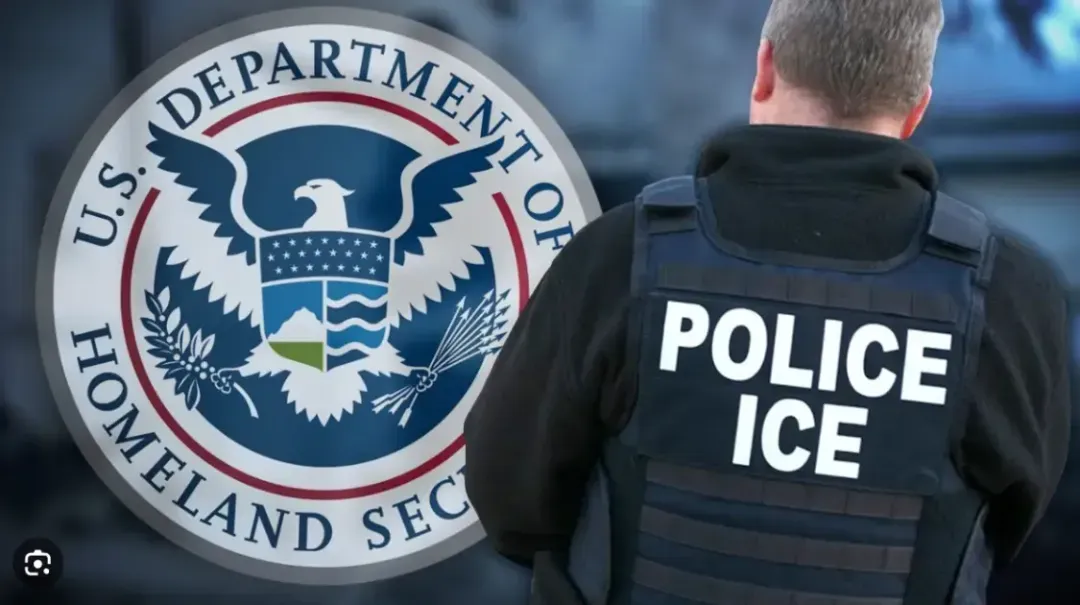
Over the past two days, a rumor claiming that “ICE is banning CPT issuance” has been widely shared within international student communities. Many students panicked after seeing screenshots: Will CPT still be available for internships going forward? Is Day‑1 CPT completely dead? Will previously approved CPT authorizations be revoked?
Over the past two days, a rumor claiming that “ICE is banning CPT issuance” has been widely shared within international student communities.
Many students panicked after seeing screenshots: Will CPT still be available for internships going forward? Is Day‑1 CPT completely dead? Will previously approved CPT authorizations be revoked?
Here is the core takeaway: CPT has not been repealed by federal legislation, nor has it been shut down nationwide across the board. Instead, ICE has significantly raised approval standards. Currently, universities including UC Berkeley and UCSD have proactively suspended approvals for non-mandatory CPT out of compliance concerns.
## 1. Background of the Incident: Not a Formal Act, but a Liability Memo Issued by ICE to Schools
The trigger of this event was August 12, 2026, when SEVP under ICE issued a guidance memo to DSOs (Designated School Officials) at U.S. higher education institutions nationwide. This is not an act of Congress or a final federal rule; it serves as compliance guidance at the policy enforcement level.
The most critical requirement in this memo states: CPT must be a mandatory and integral component of the established curriculum. In other words, CPT authorization may only be granted if the full program syllabus stipulates that all students must complete this internship to earn their degree.
The document heavily emphasizes the legal liability of school DSOs. If a university approves CPT applications that fail to meet the standards, both individual DSOs and the institution will face investigations. In severe cases, the school’s SEVP certification may be revoked, stripping it of eligibility to enroll international students.
This liability pressure prompted urgent internal policy changes at schools including UC Berkeley BIO and UCSD ISEO, which issued notifications as follows:
1. CPT required for degree completion: Applications will continue to be reviewed and approved.
If the official program curriculum explicitly requires all students to complete an internship to graduate, this category remains unaffected by the new policy.
2. Course-credit CPT (optional internship courses): Temporary suspension of applications.
This refers to the most common route used by international students in the past: enrolling in a 1‑0 credit elective internship course to obtain CPT eligibility for full-time employment. This pathway has been temporarily closed.
⚠️ Key Note: This suspension is initiated by a small number of universities voluntarily, rather than a direct federal ban. It does not mean all U.S. schools will halt CPT services simultaneously, but it will create a demonstration effect, and more universities are expected to follow suit with stricter rules.
Previously approved and active CPT authorizations will not be retroactively invalidated. Students who already hold CPT I‑20 forms may continue their internships normally without concerns about status termination.
## 2. Debunking Rumors: Two Widely Circulated Misconceptions
Misconception 1: ICE has fully banned CPT
❌ False. The USCIS Policy Manual and the SEVP official website still retain three internship authorizations: CPT, OPT and STEM OPT. CPT remains the legal mechanism for F‑1 students to participate in eligible curricular practical training. It is still issued by school DSOs via the I‑20 form and does not require students to apply for an EAD work permit from USCIS. This update does not abolish the CPT system; it merely tightens approval criteria.
Misconception 2: The DHS rule taking effect on September 15 bans CPT
❌ Two separate policies are being conflated. DHS released the F/J‑1 Final Rule on July 17, set to take effect on September 15, 2026. The core change of this rule eliminates the traditional F‑1 D/S (Duration of Status) framework and replaces it with fixed-period admission. It has nothing to do with the existence of CPT and constitutes an independent policy.
## 3. Two Types of CPT, Fates Fully Diverged
✅【Degree-Mandatory CPT】Safe
The official program curriculum requires all students in the major to complete an internship as a graduation prerequisite, without which graduation is impossible. Whether the internship starts at the beginning of the program or mid-degree, CPT applications may still proceed normally.
⛔【Elective Course Credit CPT】Await Further Updates
Many universities previously allowed students to incorporate qualified internships into their curriculum through formal internship / field study / independent study courses and apply for CPT.
The new ICE Guidance imposes heavier compliance risks for this non-graduation-mandatory category of CPT. UC Berkeley BIO and other schools have already suspended Course Credit CPT.
Berkeley’s email also specifically warned students: Non-compliant CPT may create potential risks for future OPT applications and status extensions.
## 4. Practical Recommendations for International Students in Different Situations
🎓 Current Undergraduate & Graduate Students
1. If you plan to apply for CPT, contact your campus international student office immediately to confirm the latest institutional policy, and verify whether your internship falls under “degree-mandatory” or “elective internship”.
2. Do not assume eligibility based on past practice. Policies at many universities are undergoing dynamic adjustments; always follow official feedback from your DSO.
3. Never start employment before the start date listed on your CPT I‑20. Premature work directly constitutes a violation of F‑1 status.
4. The longstanding rule remains in effect: Accumulating 12 months of full-time CPT will disqualify you from post-completion OPT at the same academic level.
📚 Admitted Students & Prospective Program Applicants
1. When evaluating programs, clearly distinguish:
Whether the internship requirement applies to all students as a graduation prerequisite, or is offered as an optional elective. Prioritize programs with explicitly mandatory internships stated in the curriculum.
2. Exercise caution with marketed Day‑1 CPT programs.
Vet the program carefully: Is early internship embedded natively into the school’s curriculum design, or is it a program tailored solely for Chinese students to work? The latter carries extreme risks now and may result in future status revocation.
🛠 Students Holding Active CPT
Already approved and valid CPT will not be cancelled. Continue your internship as scheduled. Retain full documentation including program syllabi and internship role matching proof for potential future immigration audits.
💼 Students Planning to use CPT for full-time work and job transition
The old shortcut of “taking a low-effort elective course to get CPT for full-time employment” has been effectively blocked in practice. Do not gamble on leniency from universities. Plan alternative legal pathways such as OPT and on-campus employment in advance. Do not hinge your immigration status on high-risk arrangements.
### Closing Remarks
The CPT system itself still exists, but the era of loose enforcement is over.
This SEVP policy adjustment essentially targets the misuse of CPT purely as a work authorization tool, returning CPT to its original legislative intent: internships must support degree-related academic study.
The overall F‑1 landscape will continue to grow stricter going forward. For on-campus internships, OPT, and future visa renewals, all arrangements must adhere to the “academics-first” principle, and every internship or work opportunity must be highly relevant to your major.
Any shortcut-style arrangements may trigger severe hidden risks down the line.
Practical Action Checklist for International Students:
1. Email your campus DSO immediately to confirm the latest CPT policy at your university;
2. Be wary of the pathway of “taking classes to obtain CPT for full-time work”;
3. Prioritize programs where internships are mandatory graduation requirements for all students;
4. Maintain complete course and internship documentation in preparation for possible immigration audits;
5. Do not trust unofficial policy interpretations circulating online. Always refer to official documents from your DSO and SEVP.
MentorX provides end-to-end one-on-one support covering policy interpretation, career planning, resume refinement, interview coaching and referrals to top employers. We help you clarify internship and job search strategies and resolve challenges throughout your internship and career journey.